 Save
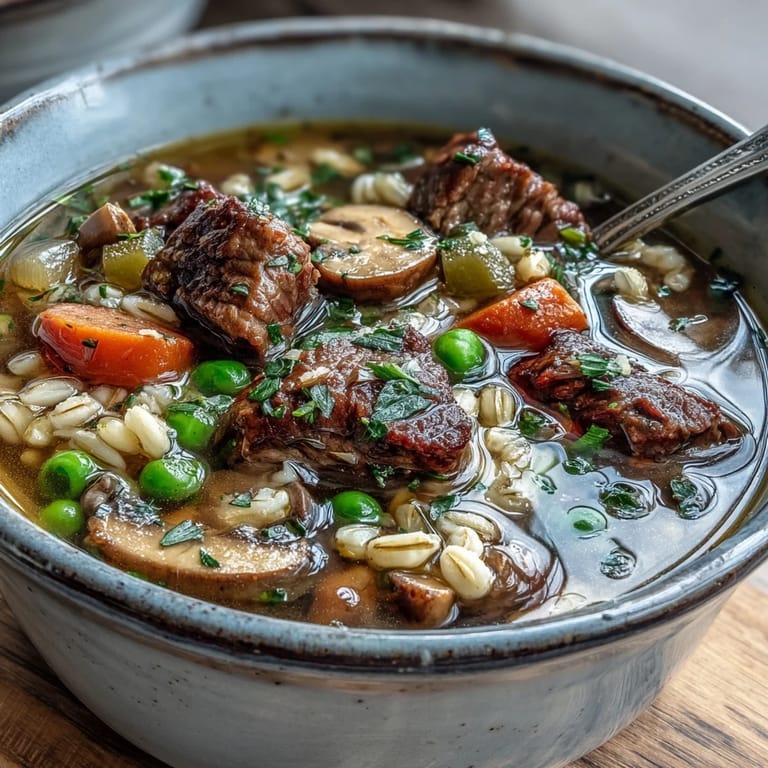
Save My uncle used to make this beef and barley soup every winter, and the smell of it simmering would fill his entire kitchen by early afternoon. I watched him work through it once, noticing how he'd taste it constantly, adjusting the broth as if he were conducting an orchestra. Years later, when I tried recreating it on my own, I realized the magic wasn't just in the ingredients but in that patient, unhurried approach to letting everything meld together. There's something deeply satisfying about a pot that does most of the work while you're free to do other things. This soup became my go-to when I needed comfort wrapped in a bowl.
I made this for my partner during our first winter together, when we were still figuring out how to be around each other in close quarters. The soup simmered quietly on the stove while we read in the living room, and there was something about that everyday gesture that felt like saying something important without words. When I ladled it into bowls and we sat down to eat, the conversation just flowed easier. Food has a way of doing that—smoothing over the awkward edges and making space for something real to happen.
Ingredients
- Beef stew meat: One pound of 1-inch cubes gives you enough substance to make each spoonful feel satisfying, and cutting them yourself means you control the texture.
- Pearl barley: Rinsing it first removes any dust and helps it cook more evenly, absorbing the broth without turning mushy.
- Carrots: Two medium ones diced add natural sweetness that balances the savory broth beautifully.
- Celery and onion: This classic trio builds flavor from the ground up—the foundation everything else rests on.
- Garlic: Two minced cloves go in after the vegetables soften, so their fragrance doesn't get lost in the cooking time.
- Potatoes: One cup diced means they'll soften by the end without falling apart into the broth.
- Mushrooms: One cup sliced adds an earthy depth that makes the soup feel more complex.
- Frozen peas: They go in at the end to keep their bright color and slight firmness against all that tenderness.
- Diced tomatoes: Optional, but a 14-ounce can adds subtle acidity that brightens the whole pot.
- Beef broth: Eight cups creates that rich, embracing warmth that defines this soup.
- Bay leaves, thyme, and parsley: Two bay leaves, one teaspoon each of dried thyme and parsley work together without overpowering the beef.
- Olive oil: Two tablespoons for browning the meat gets that initial crust that adds serious flavor.
- Salt and pepper: Always taste and adjust at the end—store-bought broths vary in saltiness.
Tired of Takeout? 🥡
Get 10 meals you can make faster than delivery arrives. Seriously.
One email. No spam. Unsubscribe anytime.
Instructions
- Brown the beef first:
- Heat your olive oil in a large pot over medium-high heat until it shimmers slightly, then add the beef cubes in a single layer. Resist the urge to stir immediately—let them sit for about two minutes on each side so they develop that golden crust. Remove them and set aside, giving yourself a moment to appreciate how much flavor you've already built.
- Build your flavor base:
- In the same pot with all those caramelized bits still clinging to the bottom, add your onions, carrots, celery, and mushrooms. Sauté for about five minutes until they soften and release their moisture, filling your kitchen with that unmistakable vegetable-cooking aroma.
- Wake up the garlic:
- Add your minced garlic and stir constantly for one minute—this is not the time to walk away because garlic burns fast and bitterness ruins everything. You'll know it's ready when it becomes fragrant and the whole kitchen smells incredible.
- Bring everything together:
- Return the beef to the pot and add potatoes, barley, diced tomatoes if you're using them, beef broth, bay leaves, thyme, and parsley all at once. Stir it all together so nothing sticks to the bottom, then bring the whole thing to a boil.
- Let it simmer gently:
- Once it boils, reduce the heat to low, cover it, and let it simmer for about an hour, stirring occasionally. The beef will gradually become tender, the barley will swell and soften, and the broth will deepen in color as everything mingles together.
- Finish with the peas:
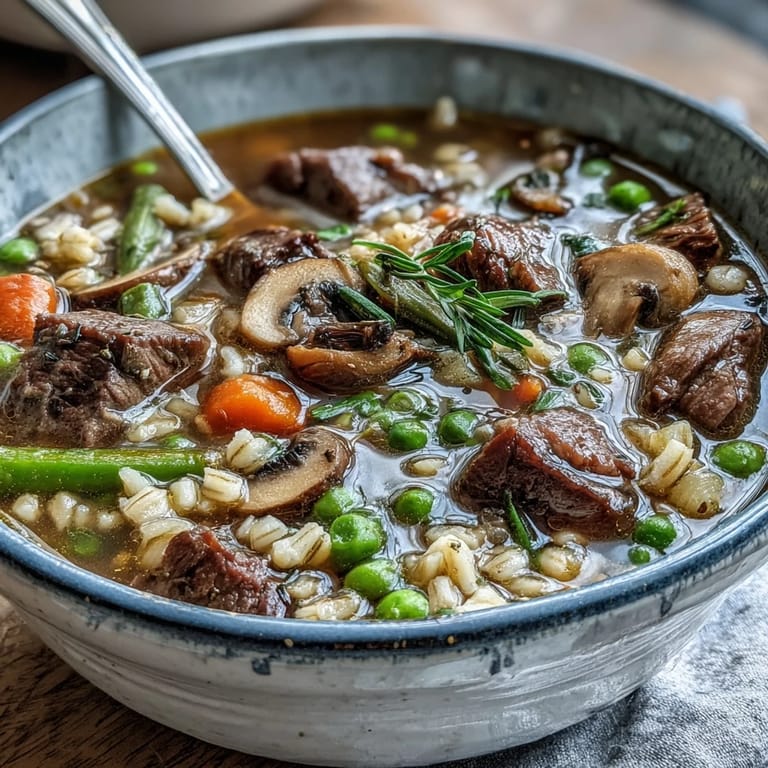
- After an hour, add your frozen peas, season generously with salt and pepper, and simmer uncovered for another 20 to 30 minutes. Taste it as you go—you're looking for that moment when the barley is tender but still has a slight chew, and the beef breaks apart with just a spoon.
- Final touch:
- Fish out those bay leaves before serving because biting into one is never pleasant. Give everything a final taste and adjust the seasoning if needed, then ladle into bowls while it's still steaming.
 Save
Save  Save
Save There's a moment near the end of cooking when you lift the lid and the steam hits your face, and you just know it's going to be good. My grandmother used to say that's when the soup tells you it's ready, and I've learned she was usually right. That's the magic of this dish—it doesn't ask for complicated techniques or rare ingredients, just patience and attention.
Why This Soup Works Year-Round
In winter, it's exactly what you want when the world outside feels cold and demanding. Come spring, you can lighten it up by using less broth or adding fresh greens toward the end. I've made it with whatever vegetables were on sale that week, and it's never disappointed me. The barley gives it enough substance that it feels like a meal rather than just a side, and the beef makes it feel like you actually cared about feeding yourself well.
Making It Your Own
This is one of those recipes that invites experimentation without falling apart. I've added a splash of red wine sometimes, or tossed in parsnips and turnips when I had them. A friend swears by adding a can of white beans for even more texture, and I've never seen her wrong about food. The base is solid enough that you can play with it and still end up with something delicious.
Storage and Make-Ahead Tips
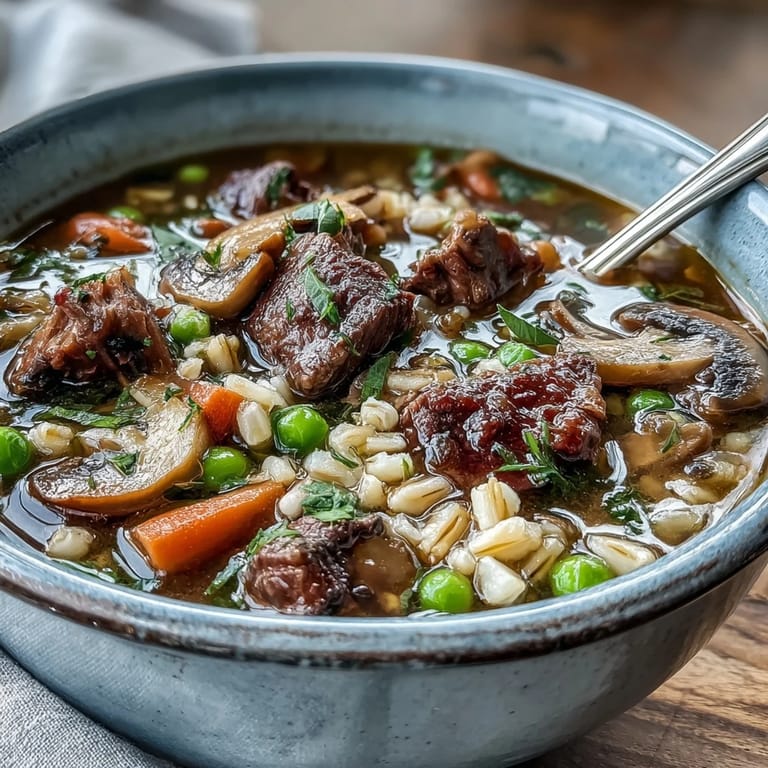
This soup actually improves over a day or two as the flavors continue to meld, making it perfect for batch cooking. Store it in airtight containers and it will keep in the refrigerator for up to four days, or freeze it for three months if you're thinking ahead. When reheating, do it gently over low heat with a splash of extra broth if it's gotten too thick, and everything will taste fresh again.
- Cool the soup completely before freezing to avoid condensation inside the container.
- Freeze in individual portions so you can thaw only what you need.
- Taste and adjust seasoning after reheating since flavors can shift slightly.
 Save
Save 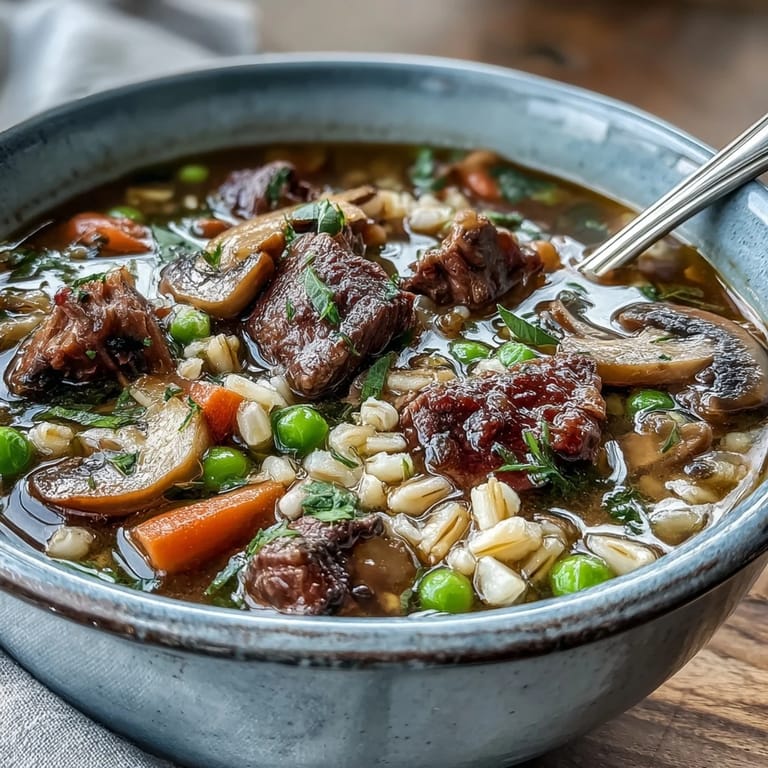 Save
Save This soup is the kind of dish that sits with you long after you've eaten it, in the best possible way. It's proof that some of the most comforting things in life don't require anything fancy, just good ingredients and a little time.
Recipe Q&A
- → Can I use a different cut of beef?
Yes, you can use chuck roast or round roast cut into 1-inch cubes. Lean beef or even turkey can be substituted for a lighter version.
- → How do I store leftovers?
Store in an airtight container in the refrigerator for up to 4 days. You can also freeze portions for up to 3 months. Thaw overnight in the fridge before reheating.
- → Can I make this in a slow cooker?
Absolutely. Brown the beef first, then add all ingredients to the slow cooker. Cook on low for 6-8 hours or high for 3-4 hours until beef and barley are tender.
- → What can I serve with this soup?
Crusty bread, dinner rolls, or a fresh green salad pair wonderfully. A robust red wine like Cabernet Sauvignon complements the rich beef flavors.
- → Can I add other vegetables?
Yes, parsnips, turnips, green beans, or corn work well. Add heartier vegetables at the beginning and delicate ones during the last 20 minutes of cooking.
- → Is pearl barley necessary or can I substitute?
Pearl barley gives the soup its signature texture, but you can use farro, wild rice, or brown rice as alternatives. Adjust cooking time accordingly.