 Save
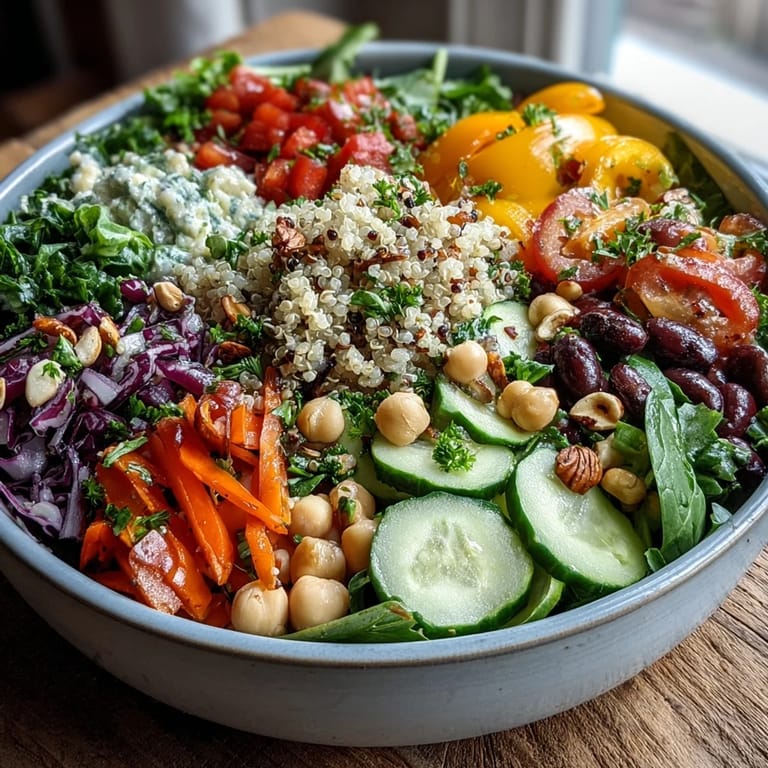
Save There's something magical about building a salad instead of tossing one together mindlessly. My neighbor brought over a rainbow bowl last summer, and I watched her arrange each ingredient in neat sections before tossing—suddenly vegetables I'd seen a hundred times looked exciting again. That simple act of intentionality changed how I approach salads, turning them from obligatory side dishes into something I actually crave. Now whenever I make this version at home, I find myself pausing to appreciate the colors before mixing it all together.
I made this for a potluck on a sweltering afternoon when nobody wanted anything hot, and I watched people go back for thirds. My friend Sarah, who's perpetually tired from her job, grabbed a bowl and sat down looking skeptical—then got unusually quiet, which I've learned means she's actually enjoying something. The combination of textures, the way the lemon dressing brings everything together without feeling heavy, the fact that it's completely plant-based but nobody even noticed—that's when I knew this salad deserved a regular spot in my rotation.
Ingredients
- Quinoa or brown rice: These are your protein anchor—quinoa has a slightly nutty flavor and fluffy texture, while brown rice is earthier and more forgiving if you accidentally overcook it by a minute.
- Cherry tomatoes, halved: Halving them rather than leaving whole prevents that frustrating slide-off-your-fork moment and lets the dressing coat them better.
- Purple cabbage: This stays crisp for days, which makes it your friend if you're prepping ahead, and the color is honestly too pretty to pass up.
- Grated carrots: The fine shreds mean more surface area for dressing absorption and a sweeter note throughout every forkful.
- Yellow bell pepper: Choose one that's firm with thick walls and a stable flat bottom so it doesn't roll around while you're dicing.
- Baby spinach: Fresh and tender, it wilts slightly when the warm grains touch it, creating this pleasant textural contrast.
- Cucumber: Keep the skin on for extra nutrients and that satisfying crunch—just choose a firm one at the market.
- Chickpeas and black beans: Rinsing them well removes the starchy liquid that can make everything taste canned, and they add substantial protein without heaviness.
- Roasted cashews or almonds: Chopped roughly so you get pieces of varying sizes, creating little pockets of richness throughout.
- Pumpkin and sunflower seeds: These add mineral content and a toasty depth, plus they stay crunchy even after dressing sits on them.
- Extra-virgin olive oil: The quality matters here since it's doing most of the flavor work in the dressing—get something you'd actually taste.
- Fresh lemon juice: Never use bottled if you can help it; the brightness matters when you're relying on citrus as your primary acid.
- Maple syrup or honey: This subtle sweetness balances the lemon without making anything taste like a dessert, and it helps everything emulsify.
- Dijon mustard: An emulsifier and flavor booster that nobody will taste as mustard but everyone will notice if it's missing.
- Fresh herbs: Parsley or cilantro scattered on top adds freshness and a visual finish that makes people actually want to eat what you've made.
Tired of Takeout? 🥡
Get 10 meals you can make faster than delivery arrives. Seriously.
One email. No spam. Unsubscribe anytime.
Instructions
- Cook your grains and let them breathe:
- Get your quinoa or brown rice going according to package directions, then spread it on a plate or shallow bowl to cool completely—this prevents it from steaming the vegetables and creating a warm, wilted mess. If you're in a hurry, a 15-minute chill in the freezer works when you're standing there impatient.
- Prep your vegetables with intention:
- Wash and dry everything thoroughly, then cut each vegetable into appropriately sized pieces that won't escape your fork or roll around the bowl. Think about the natural size of each ingredient—tomatoes can be halved, bell peppers diced small, cucumbers sliced into half-moons—so every bite contains multiple elements.
- Arrange before you combine:
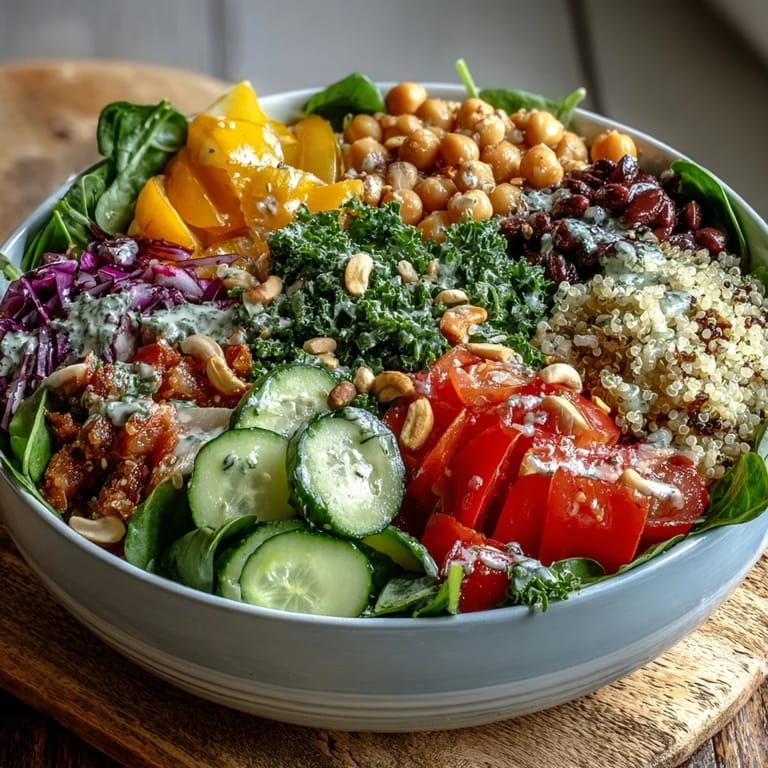
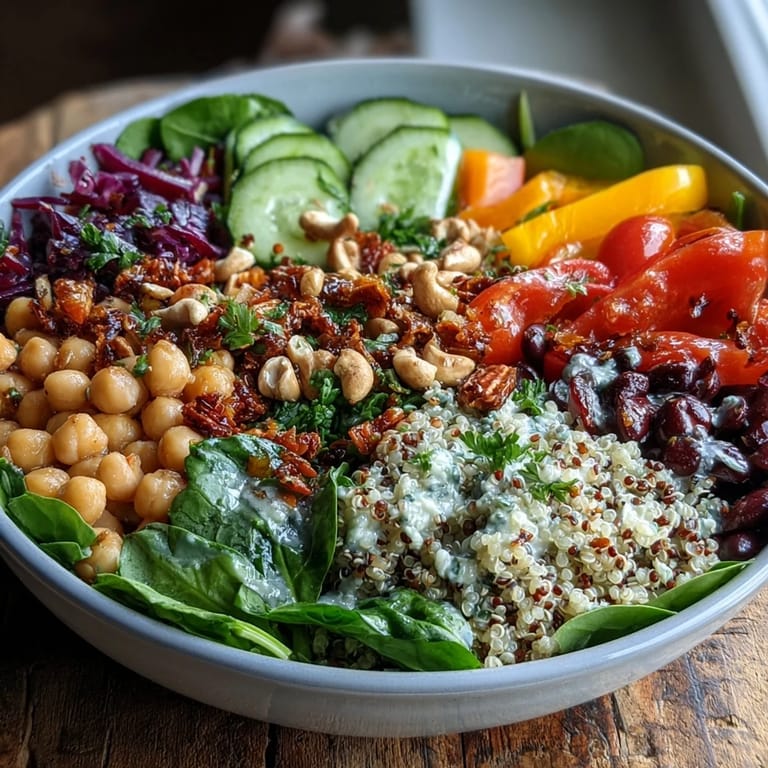
- This is the step that feels unnecessary until you do it and suddenly understand why. Lay out your cooled grains in one section, create arcs of different vegetables, pile your beans in their own spot, scatter nuts and seeds strategically. You'll see any gaps and can adjust for color balance before dressing.
- Build your dressing with care:
- In a small bowl, combine olive oil, lemon juice, maple syrup, mustard, and minced garlic—mince the garlic finely so you don't bite down on a sharp chunk. Whisk it together vigorously until it looks slightly creamy and emulsified rather than separated, which takes about a minute of actual effort.
- Dress smartly, taste as you go:
- Add salt and pepper cautiously because you'll taste as you combine everything, and oversalting is easier than fixing it. If you're serving to a group, consider serving dressing on the side so people can control their own amount.
- Finish with freshness:
- Scatter your fresh herbs across the top just before serving, and hand the salad bowl around rather than trying to plate individual servings—there's something generous about it.
 Save
Save One autumn evening, my daughter came home from school stressed about a group project, and I set this bowl in front of her without commentary. She ate quietly for a few minutes, the tension in her shoulders softening, and something about the simple act of eating something colorful and real seemed to help her think straighter. Now she requests it when she needs to feel grounded, which is maybe the best compliment a salad could receive.
The Dressing Alchemy
The magic here isn't in any single ingredient but in how they work together. Lemon juice alone tastes sharp and one-dimensional, but when you add mustard, garlic, and maple syrup, something happens where the whole becomes more sophisticated than the parts. The trick I've learned is whisking aggressively enough that the oil and lemon actually emulsify rather than just suspending uneasily together, which gives the dressing a silky body rather than that greasy, separated feeling.
Making It Yours
This recipe is intentionally flexible because different markets offer different things at different seasons. Summer means more tomatoes and peppers; autumn brings root vegetables and grains like farro or bulgur. I've made this with roasted beets for earthiness, added avocado in spring, used feta cheese when I wasn't keeping things vegan, topped it with grilled tempeh for extra protein.
Storage and Serving Wisdom
If you're meal prepping, keep the components separate in your container—grains in one section, vegetables in another, nuts and seeds in a small jar, dressing in a tight container. This way you can assemble fresh each day and maintain the textural integrity that makes this salad special. When you're ready to eat, combine everything in a large bowl and dress as you go so nothing gets waterlogged.
- Make extra nuts and seeds because you'll definitely sneak more than you planned into the salad.
- If you're serving to guests, arrange it on a large platter in sections so people can see what they're choosing and feel involved in the composition.
- This salad travels well to picnics or office lunches if you pack dressing separately and dress it right before eating.
 Save
Save This salad stopped being just a recipe for me somewhere between making it the third time and realizing my family was requesting it by name. It's become the thing I reach for when I want to nourish people without fussing, when I need something that tastes fresh and intentional, when I remember that eating well doesn't have to be complicated.
Recipe Q&A
- → Can I make this ahead of time?
Yes, prepare all components up to 2 days in advance and store separately. Toss with dressing just before serving to maintain the fresh crunch of vegetables.
- → What other grains work well?
Brown rice, farro, bulgur, or couscous all substitute beautifully for quinoa. Just ensure grains are cooked and cooled before assembling for the best texture.
- → How can I add more protein?
Grilled tofu, tempeh, roasted chicken, or feta cheese all complement these flavors. Simply add about ½ cup per serving for a protein boost.
- → Is the dressing customizable?
Absolutely. Try balsamic vinegar instead of lemon, add fresh herbs like basil or dill, or substitute tahini for a creamier version.
- → What vegetables can I substitute?
Feel free to use shredded beets, corn, edamame, sliced radishes, or roasted sweet potatoes. The key is maintaining a variety of colors and textures.