 Save
Save There's something almost magical about the way butternut squash transforms in the oven—those hard, pale cubes turning honeyed and soft, filling your kitchen with this warm, earthy sweetness that makes you want to wrap your hands around a bowl before you've even finished cooking. My neighbor actually taught me this soup years ago when she showed up at my door on a particularly gray October afternoon with a squash under her arm and the kind of energy that said we were about to make something memorable together. What I love most is how little effort it actually takes to end up with something that tastes like you've been stirring it all day.
I made this for my book club on a rainy November night, and it was one of those rare moments where the food actually sparked conversation instead of being forgotten while everyone talked. Someone came back into the kitchen asking if I'd added cinnamon (I hadn't, just nutmeg), and another person went home with the recipe written on the back of a grocery receipt because they wanted it that badly. Comfort food doesn't need to be complicated—it just needs to feel like someone cared enough to make it.
Ingredients
- 1 large butternut squash (about 2 lbs), peeled, seeded, and cubed: This is your star, and choosing one that feels heavy for its size means you're getting maximum flesh and less waste—look for ones with deep orange color and avoid any soft spots.
- 1 medium yellow onion, chopped: The sweetness here balances beautifully with the squash, and honestly, a slightly larger onion won't hurt if that's what you have.
- 2 garlic cloves, peeled: Don't skip these or use jarred; fresh garlic keeps everything from feeling one-dimensional.
- 1 medium carrot, peeled and chopped: This adds subtle sweetness and body without stealing the show from the squash.
- 4 cups vegetable broth (gluten-free, if needed): Use the good stuff if you can—low-sodium broth lets you control the salt and keeps the flavors cleaner.
- 2 tbsp olive oil: The roasting depends on this, so don't go too light; it's what turns everything golden and caramelized.
- 1 tsp salt: Start here and taste before adding more; you'll likely need a touch more once everything's blended together.
- 1/2 tsp black pepper: Freshly ground makes a real difference in the final taste.
- 1/2 tsp ground nutmeg: This is the secret ingredient that makes people ask what you did differently; it's warm without being spicy.
- 1/4 tsp cayenne pepper (optional): Add this if you want just a whisper of heat to cut through the richness, but it's genuinely optional.
- 1/4 cup heavy cream or coconut cream (optional): Either one adds a silky finish, though the soup is beautiful without it if you're keeping it lighter.
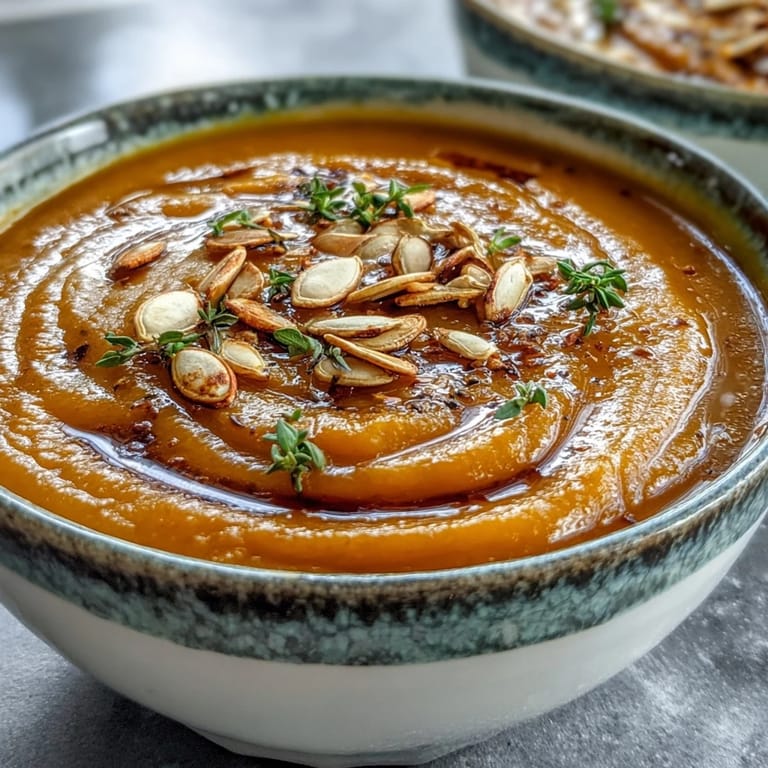
- Toasted pumpkin seeds (optional): These add a delightful crunch and a little earthiness that feels like the recipe is getting dressed up.
- Fresh thyme (optional): A few leaves on top tie everything together and make it look intentional.
Tired of Takeout? 🥡
Get 10 meals you can make faster than delivery arrives. Seriously.
One email. No spam. Unsubscribe anytime.
Instructions
- Heat your oven and prep the vegetables:
- Get your oven to 400°F while you cut the squash into roughly 1-inch cubes—they don't need to be perfect, just fairly consistent so they roast evenly. Chop your onion, mince the garlic, and cut the carrot into similar-sized pieces, then spread everything out on a baking sheet.
- Coat everything in oil and get it roasting:
- Drizzle the olive oil over everything and toss it all together with your hands until each piece is lightly coated; this is where the magic starts. Pop it into the oven for 30–35 minutes, giving it a good stir halfway through, until the squash is fork-tender and the edges are turning golden and slightly caramelized.
- Move everything to the pot and build the soup:
- Scrape all those roasted vegetables into a large pot—don't waste any of those caramelized bits at the bottom of the pan. Pour in the vegetable broth along with the salt, pepper, nutmeg, and cayenne if you're using it, then bring it all to a gentle simmer over medium heat.
- Let it simmer and meld:
- Let it bubble gently for about 10 minutes so all the flavors get to know each other. The soup might already smell incredible, but this step is what turns it from just roasted vegetables in broth into something cohesive and warm.
- Blend until silky smooth:
- Using an immersion blender, work through the soup right there in the pot, moving it around until everything's completely smooth and creamy-looking. If you're using a countertop blender, work in batches and be careful with the heat—let it cool just slightly first if you're worried, then blend it back into the pot.
- Taste and adjust:
- This is the moment to taste and decide if it needs more salt, pepper, or even a tiny pinch more nutmeg. If it feels too thick, a splash more broth loosens it up; if you want richness, stir in the cream now.
- Serve it warm and make it beautiful:
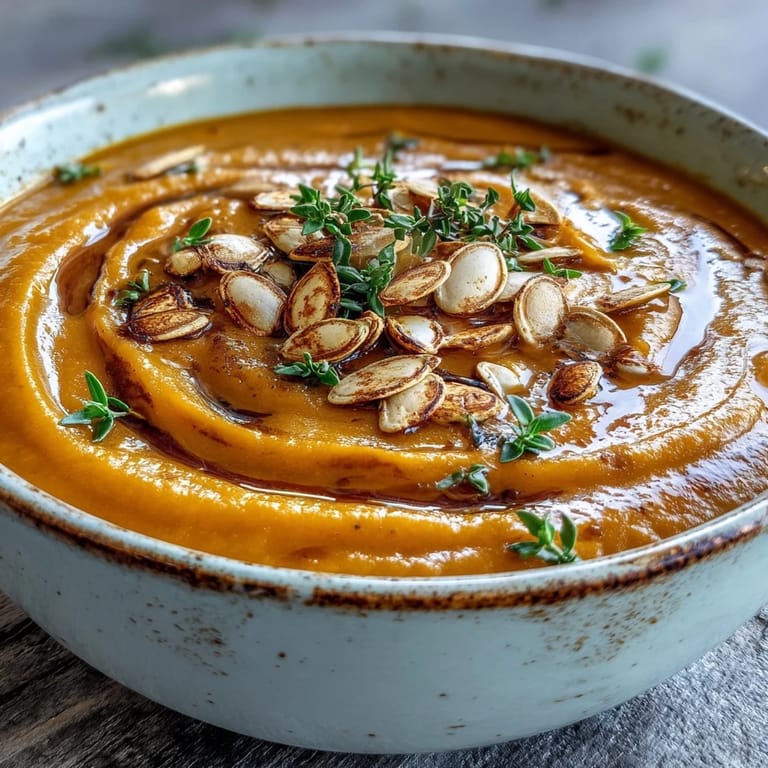
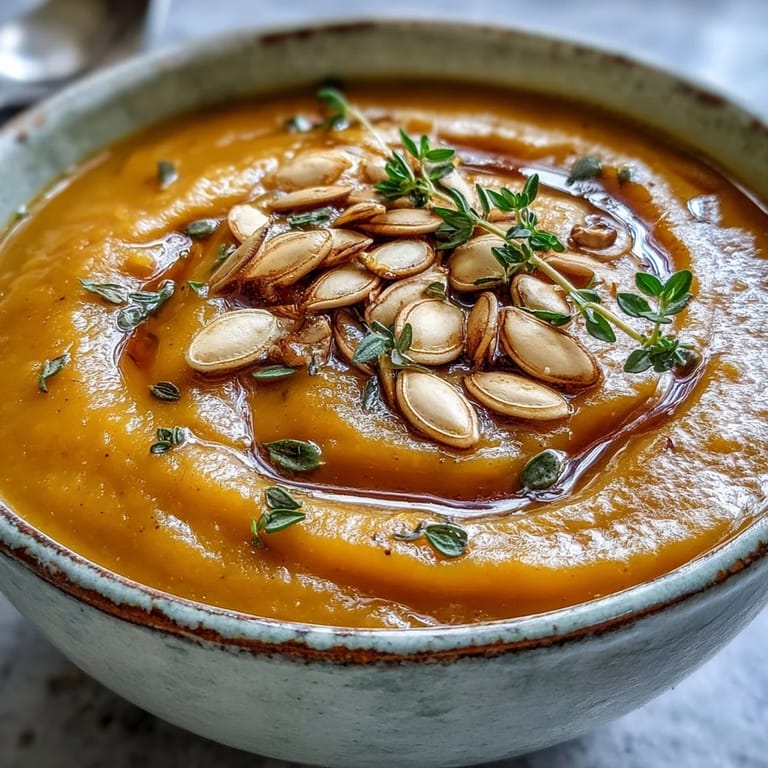
- Ladle it into bowls while it's still steaming hot, then add whatever garnishes speak to you—a swirl of cream, some toasted pumpkin seeds for crunch, and a couple of fresh thyme leaves scattered on top. It's the little touches that make it feel like something you actually cared about making.
 Save
Save  Save
Save There was this Tuesday morning when my kid came downstairs sick and asked for soup, and I realized I had almost everything in the house already—it felt like the best kind of luck. By the time it was ready, they were curled on the couch with a mug, and watching someone feel genuinely comforted by something you made is honestly the whole point of cooking.
The Magic of Roasting
Roasting vegetables instead of just boiling them changes everything about this soup. The dry heat of the oven concentrates the natural sugars in the squash and carrot, caramelizing the edges and deepening the flavor in a way that steaming or simmering alone never could. It takes the same amount of time as most cooking methods, but the result tastes like you've been simmering this all day.
Variations That Work
This soup is genuinely forgiving, and small changes can shift the whole personality of it depending on what mood you're in or what you have on hand. I've added a cinnamon stick during simmering for a deeper warmth, thrown in a small apple with the other roasted vegetables for subtle sweetness, or even stirred in a touch of sage for something earthier and more complex. The structure stays the same, but you're free to play.
Storing and Reheating
This soup keeps beautifully in the refrigerator for about four days in a covered container, and it actually tastes even better on day two when everything's had time to settle and meld. You can freeze it for up to three months if you want to get ahead, though I'd recommend leaving out the cream if you're freezing—add that fresh when you're reheating instead. Reheat gently over medium-low heat, stirring occasionally, and add a splash of broth if it's thickened too much.
- Make a double batch when you have time; having this in the freezer feels like insurance against bad days.
- Serve it with crusty bread or pair it with a grilled cheese sandwich for the kind of lunch that feels like a hug.
- This soup loves good company, so don't hesitate to share it or bring it to someone who could use some comfort.
 Save
Save 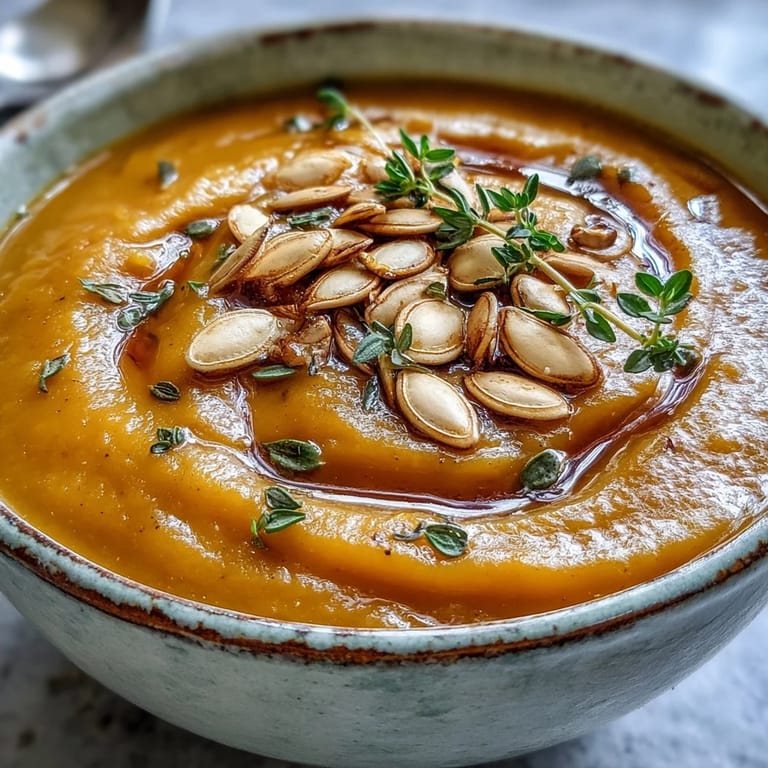 Save
Save This soup has become one of those recipes I make without thinking, the way you'd make tea or coffee, and it never fails to make someone feel cared for. I hope it becomes that kind of reliable comfort in your kitchen too.
Recipe Q&A
- → Can I make this soup ahead of time?
Yes, this soup stores beautifully in the refrigerator for up to 5 days or in the freezer for up to 3 months. Reheat gently on the stovetop, adding a splash of broth if needed to adjust consistency.
- → How do I make this soup vegan?
Simply use coconut cream instead of heavy cream for garnish. The vegetable broth is already plant-based, making this an easy vegan conversion while maintaining the rich, creamy texture.
- → Can I use pre-cut butternut squash?
Absolutely! Pre-cut squash saves significant prep time. Just ensure the pieces are similar in size for even roasting and proceed with the same roasting instructions.
- → What can I substitute for butternut squash?
You can use other winter squashes like acorn squash, kabocha, or even sweet potatoes. Adjust roasting time as needed based on the vegetable's density and moisture content.
- → Why does roasting make a difference?
Roasting caramelizes the natural sugars in the vegetables, creating deeper, more complex flavors compared to simply boiling. The high heat also concentrates flavors by evaporating excess moisture.
- → How can I make the soup thicker or thinner?
For thicker soup, use less broth or add a peeled potato while roasting. For thinner consistency, simply stir in additional vegetable broth after blending until you reach your desired texture.