 Save
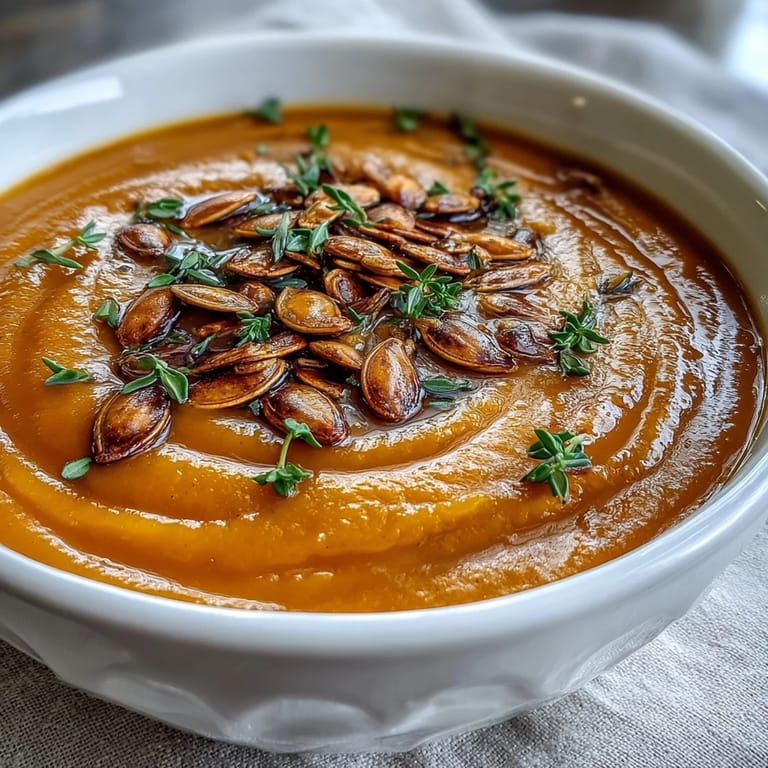
Save There's something about October that makes me crave butternut squash soup—not out of obligation, but because I want to sit with a bowl of it while the kitchen fills with that deep, toasty smell of roasted squash. My neighbor once described hers as tasting like autumn in a spoon, and honestly, she wasn't wrong. The first time I made this version, I underestimated how much the roasting step would change everything, turning those pale cubes into something almost caramelized and alive with flavor. Now I can't imagine making it any other way.
I made this soup on a gray November evening when a friend called saying she was overwhelmed with everything—work, life, the usual spiral. By the time she arrived, the whole apartment smelled like cinnamon and caramelized sweetness, and something about that shifted her whole mood. We sat with bowls of it while rain tapped against the windows, and she said it was exactly what she needed without knowing she needed it. That's when I realized this soup does something beyond nourishing—it creates a moment.
Ingredients
- 1 large butternut squash (about 1.2 kg / 2.5 lbs), peeled, seeded, and cubed: This is the star, and buying one whole squash instead of pre-cut pieces makes a real difference in flavor and texture—plus it's less expensive and you control the cube size.
- 1 medium yellow onion, chopped: The base note that keeps this soup grounded and prevents it from tasting one-dimensional.
- 2 cloves garlic, minced: Don't skip this; garlic adds depth that rounds out all that natural squash sweetness.
- 1 liter (4 cups) vegetable broth: Use good quality broth here—it's not hidden by other flavors, so it matters.
- 250 ml (1 cup) water: This thins things out without diluting the flavor the way more broth alone would.
- 120 ml (1/2 cup) coconut milk or heavy cream: Coconut milk keeps it vegan and adds a subtle richness; heavy cream makes it denser and more luxurious.
- 2 tbsp pure maple syrup: Real maple syrup, not the pancake kind—the difference is noticeable and worth it.
- 1/4 tsp ground nutmeg and 1/2 tsp ground cinnamon: These warm spices are what transform it from plain squash soup into something that tastes like comfort.
- 2 tbsp olive oil: Divided between the roasting and the sautéing, it builds the foundation of everything that comes after.
- Salt and freshly ground black pepper, to taste: Always finish at the end after blending—tastes change as the soup cooks.
Tired of Takeout? 🥡
Get 10 meals you can make faster than delivery arrives. Seriously.
One email. No spam. Unsubscribe anytime.
Instructions
- Heat your oven and prep the squash:
- Preheat to 200°C (400°F) and get your butternut squash cubed—don't stress about perfect uniformity, but try to keep pieces roughly the same size so they roast evenly. Toss them with a tablespoon of olive oil, salt, and pepper on a baking sheet.
- Roast until golden:
- This is the most important step; spend those 30–35 minutes letting the squash caramelize, turning it halfway through. You're not just cooking it—you're deepening its flavor in a way boiling never will.
- Build your base:
- While squash roasts, heat the remaining tablespoon of oil in a large pot over medium heat. Sauté your chopped onion for about 4–5 minutes until it turns translucent and softens, then add the minced garlic and cook for just a minute longer until fragrant.
- Combine everything:
- Add the roasted squash to your pot along with the vegetable broth, water, maple syrup, nutmeg, and cinnamon. Stir it all together so nothing sticks to the bottom, then bring it to a boil before reducing to a simmer for 10 minutes to let the flavors marry.
- Blend until smooth:
- Using an immersion blender, purée everything directly in the pot until you reach that velvety consistency—or work in batches with a countertop blender if you prefer. Be careful with hot liquid if using a standard blender, and don't forget to let it cool slightly first.
- Finish with cream:
- Stir in your coconut milk or heavy cream, taste it, and adjust seasoning with more salt and pepper as needed. If it's cooled down, reheat gently before serving.
 Save
Save  Save
Save My sister served this at a dinner party where someone was going through a hard time, and I watched people's shoulders literally drop when they took that first sip. There's honesty in good soup—you can't fake it or hide shortcuts—and this one carries a kind of warmth that feels earned.
Why Roasting Changes Everything
The difference between roasted and boiled butternut squash is the difference between a song and the same song played through a telephone. Roasting concentrates the natural sugars, allowing them to caramelize slightly and develop this toasty, almost nutty undertone that boiling just can't achieve. The flesh also becomes denser and more flavorful rather than watery and diffuse. I learned this the hard way by making the soup both ways back-to-back, and once I tasted the roasted version, I understood why some recipes insist on certain techniques—they're not being fancy, they're being honest about what actually tastes better.
Choosing Cream vs. Coconut Milk
This choice changes the personality of the soup without changing its soul. Heavy cream makes it richer and almost dessert-like in its decadence—perfect if you're serving it as part of a special meal. Coconut milk keeps it lighter and adds a subtle floral note that some people find more interesting; it also makes the whole thing vegan-friendly without any sacrifice to taste or texture. I've made it both ways depending on the season and my mood, and honestly, you can't go wrong—just know that cream will give you that silky, almost luxurious feel, while coconut milk stays a bit more delicate.
Serving, Storing, and Making It Your Own
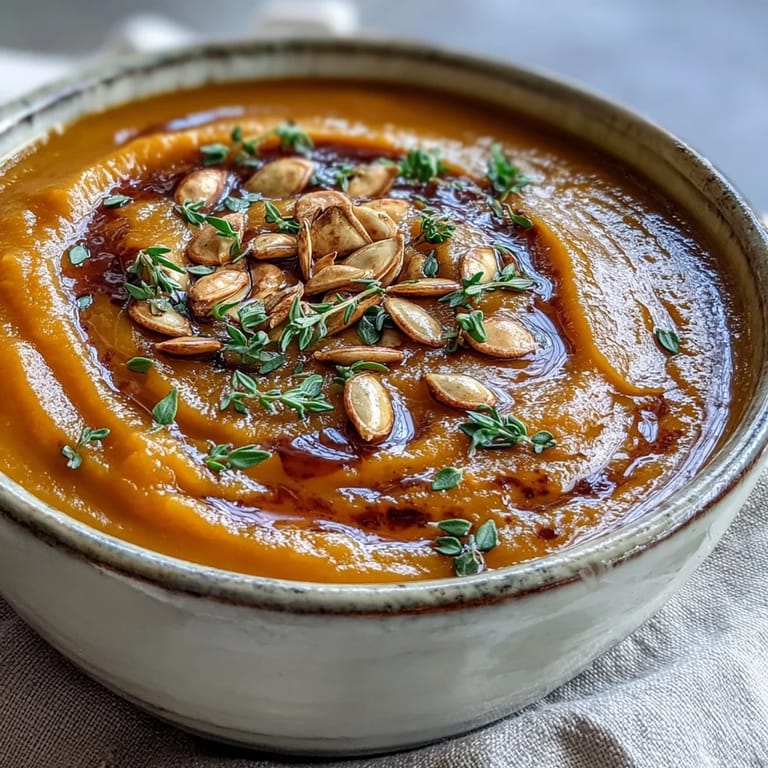
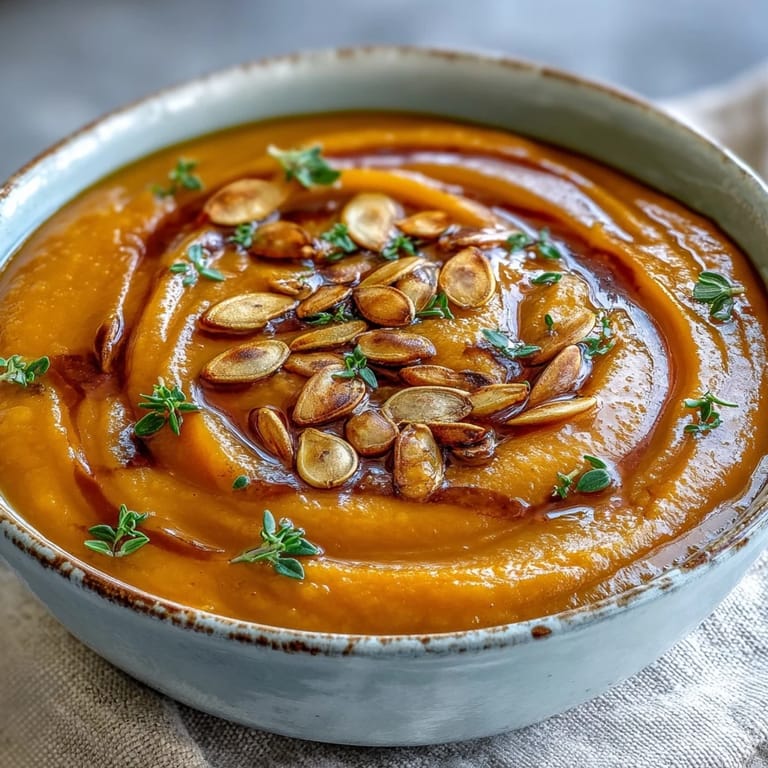
Serve this soup hot in whatever bowl makes you happy, and don't skip the garnish—toasted pumpkin seeds add a little crunch and nuttiness that rounds everything out beautifully. A drizzle of maple syrup on top might sound redundant until you taste how it creates these little sweet pockets, and fresh thyme leaves add a subtle herbaceous note that no one can quite identify but everyone notices. Store leftovers in an airtight container in the fridge for up to four days, or freeze for up to three months; it reheats gently on the stovetop without any separation or weirdness. If you want to play with flavor, a pinch of cayenne pepper adds a whisper of heat that keeps it from feeling too one-note, or try a tiny splash of apple cider vinegar to brighten everything up.
- Make it ahead—this soup actually tastes better the next day once the flavors have settled.
- Serve alongside crusty bread or a simple green salad to make it feel like a complete meal.
- If it thickens too much in the fridge, just add a splash of vegetable broth or water when reheating to get back to that perfect consistency.
 Save
Save 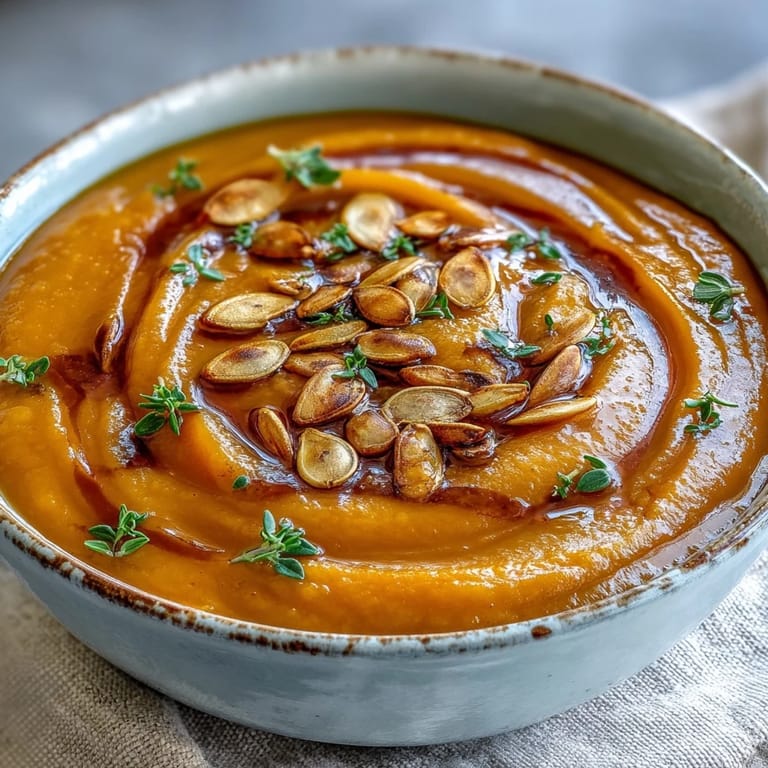 Save
Save This soup has become my answer to almost every question life asks in fall and early winter—too busy to cook, needing comfort, wanting to feel like you tried, all of it. Make it once and you'll understand why.
Recipe Q&A
- → Can I make this soup ahead of time?
Yes, this soup stores beautifully in the refrigerator for up to 4 days. Reheat gently on the stovetop and add a splash of broth if needed to adjust consistency. It also freezes well for up to 3 months.
- → What can I use instead of maple syrup?
Honey or brown sugar work as substitutes, though maple syrup provides the most authentic flavor profile. Start with 1 tablespoon and adjust to taste based on the natural sweetness of your squash.
- → Do I have to roast the butternut squash?
Roasting is highly recommended as it caramelizes the natural sugars and develops deeper flavor. However, you can simmer cubed raw squash directly in the broth for 20-25 minutes if short on time.
- → How do I make this soup thicker or thinner?
For thicker consistency, reduce the amount of broth or add an extra cup of roasted squash. To thin it out, gradually stir in additional vegetable broth or water until you reach desired consistency.
- → What type of coconut milk should I use?
Full-fat canned coconut milk provides the richest, creamiest texture. Avoid coconut milk beverages as they're too thin. Shake the can well before opening to blend the cream and liquid.
- → Can I add other vegetables to this soup?
Absolutely! Carrots, sweet potatoes, or parsnips complement butternut squash beautifully. Roast them alongside the squash and adjust cooking time as needed based on vegetable density.