 Save
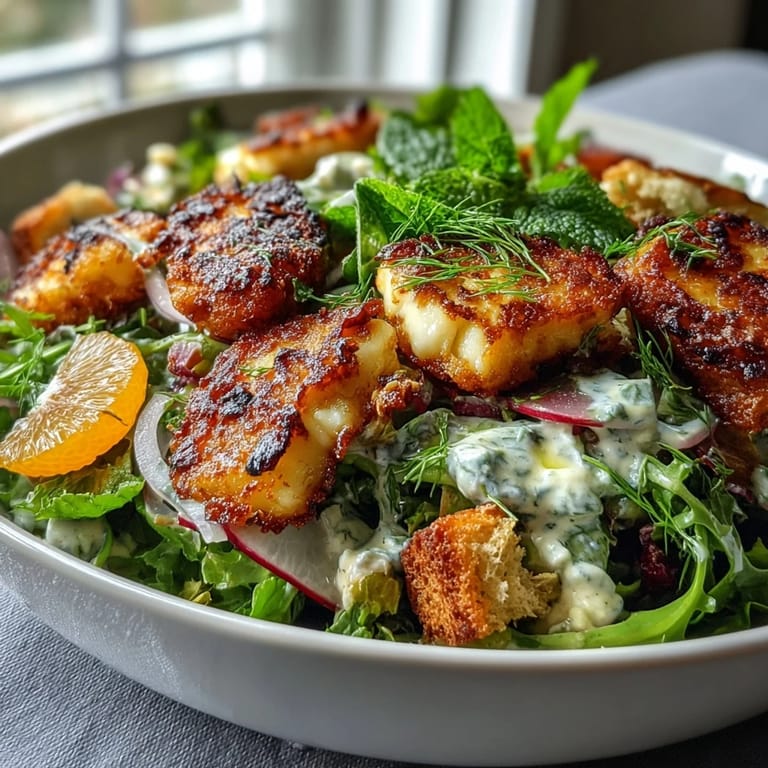
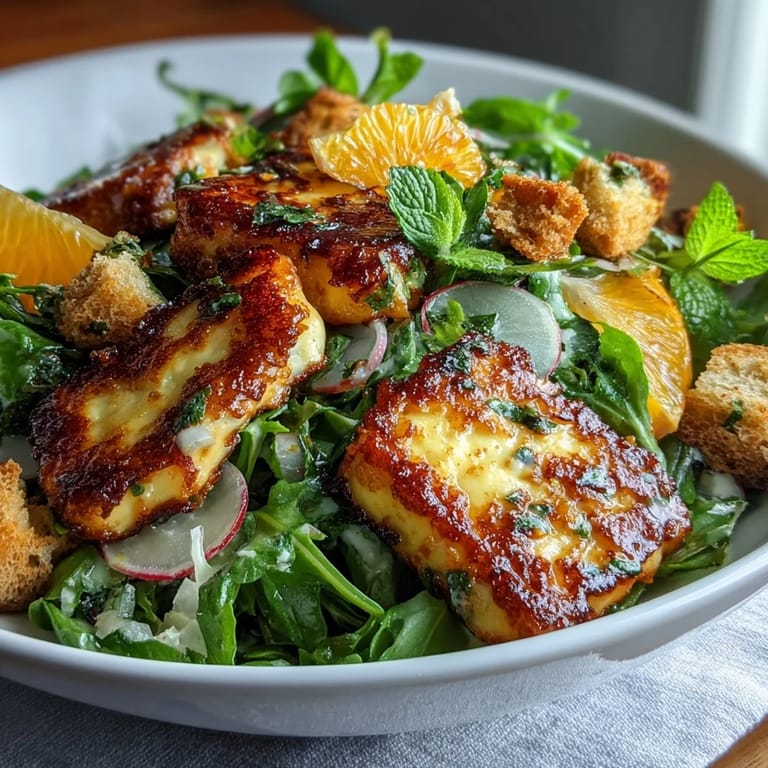
Save There's something about the sharp sizzle of halloumi hitting a hot pan that makes you feel like you're cooking something genuinely special, even if you're just standing in your kitchen on a Tuesday afternoon. I discovered this salad during a lazy browse through a cookbook someone left at a dinner party, and what struck me wasn't the ingredient list but the promise of warm cheese meeting bright citrus and that tangy, almost floral note of sumac. The combination seemed impossible until I made it, and suddenly everything made perfect sense.
I made this for my sister's birthday lunch last spring, and watching her face when that first forkful of warm cheese mixed with the cold greens and blood orange juice was worth every minute of prep work. She kept asking how I'd thought to combine those flavors, and honestly, I think she's made it three times since then, which feels like the highest compliment.
Ingredients
- Halloumi cheese, 200 g sliced into 1 cm pieces: This is the star, and its high melting point means it actually fries instead of melting into a puddle, creating those glorious golden-brown edges.
- Blood oranges, 2 peeled and segmented: Their deeper, slightly tart flavor beats regular oranges here, but honestly if that's all you have, it still works beautifully.
- Mixed salad greens, 150 g (romaine, arugula, parsley, mint): The variety matters because each green brings its own texture and personality to the bowl.
- Cucumber, 1 small diced: Keeps things fresh and crisp, acting as a palate cleanser between bites of rich cheese.
- Cherry tomatoes, 8 halved: Their sweetness complements the citrus without overpowering it.
- Red onion, ½ small thinly sliced: Raw onion gives you a subtle bite that awakens your taste buds without being aggressive.
- Radishes, 2 thinly sliced: They add peppery crunch and a delicate bitterness that rounds out the flavor profile.
- Sourdough bread, 2 thick slices cut into cubes: The tang of sourdough actually complements the sumac dressing in ways regular bread simply doesn't.
- Olive oil for croutons, 2 tbsp: Don't skip toasting these yourself—store-bought croutons are never quite the same.
- Sea salt and black pepper: Quality matters here because these are your seasoning anchors.
- Extra virgin olive oil for dressing, 3 tbsp: Use something you actually enjoy tasting because it's front and center in the dressing.
- Fresh lemon juice, 1½ tbsp: Freshly squeezed is non-negotiable; bottled has a metallic aftertaste that ruins the whole thing.
- Pomegranate molasses, 1 tbsp: This is the secret ingredient that makes people ask what you did differently; it adds depth and sophistication.
- Sumac, 1 tsp: This lemony spice is what gives the dressing its distinctive Middle Eastern character and beautiful rust color.
Tired of Takeout? 🥡
Get 10 meals you can make faster than delivery arrives. Seriously.
One email. No spam. Unsubscribe anytime.
Instructions
- Make Your Croutons First:
- Preheat your oven to 200°C and toss those sourdough cubes with olive oil and sea salt until every piece glistens slightly. Spread them on a baking tray and let them go golden and crispy for about 8 to 10 minutes, then set them aside to cool completely so they stay crunchy.
- Pan-Fry the Halloumi:
- Get your non-stick skillet hot over medium heat and lay those cheese slices down carefully—you'll hear them sizzle almost immediately. Cook for 2 to 3 minutes per side until they develop that gorgeous golden-brown crust, then transfer them briefly to a paper towel to drain any excess oil.
- Assemble Your Greens:
- In a large salad bowl, combine all your greens, cucumber, cherry tomatoes, red onion, radishes, and blood orange segments, letting them sit together for a moment so the flavors start mingling.
- Whisk the Dressing:
- In a small bowl, whisk together the olive oil, fresh lemon juice, pomegranate molasses, sumac, black pepper, and salt until the mixture emulsifies slightly and turns a beautiful reddish-brown color. Taste it as you go—you want that perfect balance of tart and savory.
- Bring It All Together:
- Add your warm halloumi and crispy croutons to the salad bowl, pour the dressing over everything, and toss gently so the greens coat evenly without bruising. Serve immediately while the cheese is still warm and the croutons haven't started to soften.
 Save
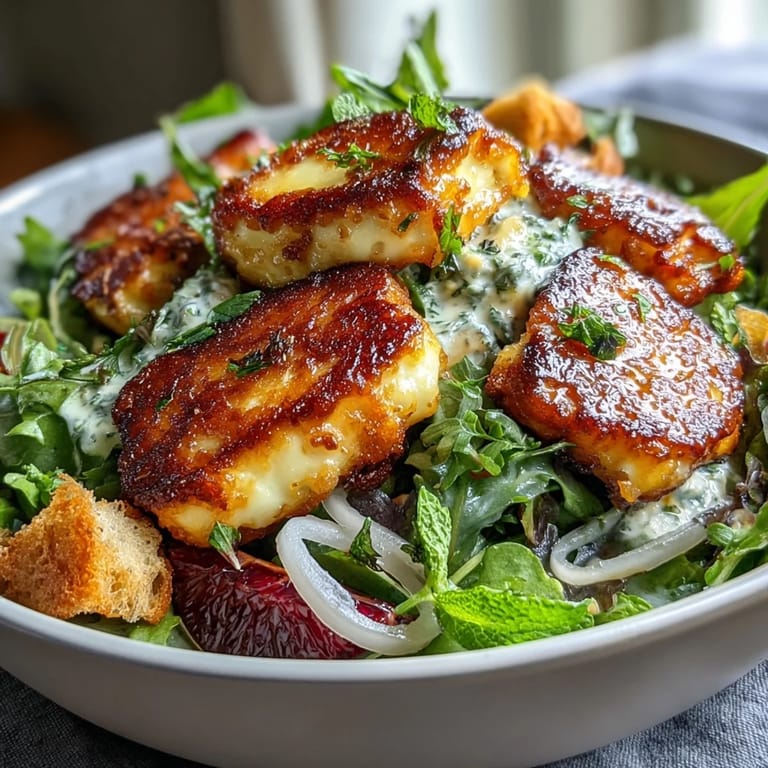
Save There's a moment when everything comes together that makes this salad feel less like a recipe and more like edible poetry, especially when someone pauses mid-bite and their eyes light up because they didn't expect cheese to work so well with blood orange. That's when you know you've made something worth making again.
Why This Salad Works
The genius here is textural contrast—you've got warm against cold, crispy against soft, salty against sweet, and bitter against bright. Every spoonful hits different sensations that somehow align into something coherent and deeply satisfying. It's the kind of salad that feels indulgent even though it's mostly vegetables, which is honestly the dream.
Timing and Temperature Matter
This is one of those rare salads where you can't make it and let it sit for twenty minutes before serving because the halloumi will cool down and lose its personality. The contrast between warm cheese and cold greens is essential to how everything tastes, so think of it as a salad you make when you're ready to eat, not something you prep in advance.
Variations and Additions
Once you've made this a few times and feel comfortable with the core flavors, you can start playing around. I've added toasted pistachios for crunch, swapped blood oranges for pink grapefruit segments when I couldn't find them at the market, and even scattered pomegranate seeds over top for extra tartness and visual drama. The foundation is strong enough to support your creativity.
- Toasted pistachios or walnuts add a nutty richness that deepens the whole experience.
- Pink grapefruit or regular oranges work fine if blood oranges aren't available, though they'll shift the flavor profile slightly.
- Pomegranate seeds make a stunning garnish and add another layer of tangy sweetness that guests always comment on.
 Save
Save This salad has become the thing I make when I want to feel like I'm cooking something important, even when I'm just feeding myself on a quiet evening. There's real joy in the simplicity of it.
Recipe Q&A
- → What makes fattoush different from regular salads?
Fattoush is a Middle Eastern salad distinguished by its use of crispy fried or toasted bread pieces combined with fresh vegetables and a tangy sumac-based dressing. The bread soaks up the dressing while maintaining crunch, creating unique texture and flavor dimensions.
- → Can I prepare the components ahead of time?
Yes, you can prepare the dressing, chop vegetables, segment oranges, and bake croutons up to 24 hours in advance. Store components separately in the refrigerator. Fry the halloumi just before serving to maintain its signature warm, crispy texture against the cool salad.
- → What can I substitute for halloumi cheese?
Paneer, firm feta, or grilled panels cheese work well as alternatives. For a vegan option, try extra-firm tofu pressed and pan-fried with a pinch of salt. Each substitute brings slightly different flavors but maintains the satisfying protein element.
- → Why use blood oranges instead of regular ones?
Blood oranges offer a beautiful ruby color and slightly berry-like sweetness that complements the salty halloumi and tangy sumac dressing. Their vibrant hue makes this visually stunning. Regular oranges or grapefruit work if blood oranges aren't available.
- → Is pomegranate molasses essential for the dressing?
Pomegranate molasses provides signature tartness and depth to Middle Eastern dressings. If unavailable, substitute with equal parts balsamic vinegar and a touch of honey, or use extra lemon juice with a pinch of sugar for similar acidity balance.
- → How do I prevent the croutons from getting soggy?
Bake the sourdough cubes until thoroughly golden and crisp throughout. Cool completely before adding to salad. Toss croutons with dressing just before serving rather than letting them sit dressed. Alternatively, serve croutons on the side for guests to add themselves.