 Save
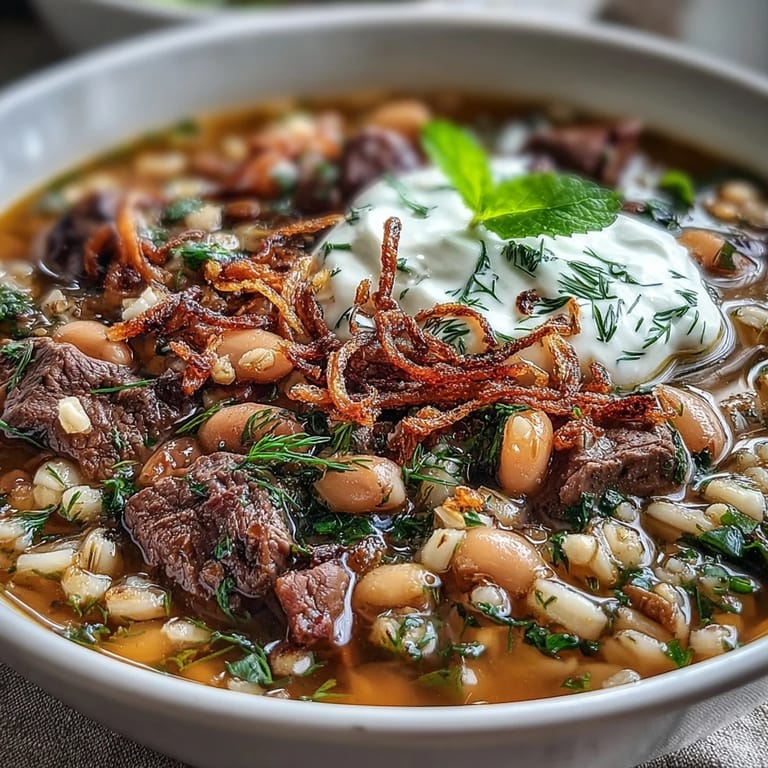
Save A friend once handed me a steaming bowl of this soup on a cold Tehran evening, and I watched the sour cream swirl into crimson broth like marble. The fragrance of mint-fried onions rose with the steam, and suddenly I understood why this dish had survived generations in Persian kitchens. It wasn't just food—it was a ritual of warmth, layered with textures and flavors that felt both familiar and mysterious.
I made this for my family on a snowy afternoon, and my daughter actually put down her phone to ask for a second bowl. The kitchen smelled so good that neighbors texted to ask what we were cooking, which was funny because I'd only started it an hour before.
Ingredients
- Beef stew meat: Cut into 2 cm cubes for even cooking; you want pieces substantial enough to stay tender but small enough to distribute throughout each spoonful.
- Pearl barley: Rinsing removes surface starch and helps it cook evenly; it softens to a creamy texture without becoming mushy.
- Dried lentils: These hold their shape beautifully and add earthiness that plays well against the bright herbs.
- White beans or cannellini beans: Soaking overnight is crucial—it ensures they cook through in the final hour rather than staying chalky in the center.
- Onion, carrots, celery: This aromatic base is where flavor begins; don't skip the step of caramelizing the onions slightly for deeper sweetness.
- Fresh herbs: Parsley, cilantro, dill, and chives are added late to preserve their brightness; dried herbs simply won't deliver the same luminous quality.
- Sour cream: The tangy richness here isn't just garnish—it's contrast that makes the entire bowl more interesting.
- Ground turmeric: Just enough to hint at earthiness and give the broth a warm golden tone.
- Beef or vegetable stock: Quality matters here because it's the foundation; two liters sounds like a lot, but it reduces slightly during cooking.
Tired of Takeout? 🥡
Get 10 meals you can make faster than delivery arrives. Seriously.
One email. No spam. Unsubscribe anytime.
Instructions
- Brown the beef:
- Heat olive oil until it shimmers, then add beef cubes in a single layer without crowding. Let them sit undisturbed for about two minutes so they develop a golden crust—this locks in flavor.
- Build the flavor base:
- After removing beef, sauté onions until they're genuinely golden, not just pale. The garlic and spices bloom in that hot oil for just a minute, filling your kitchen with a scent that makes you excited for soup.
- Add the vegetables:
- Carrots and celery soften quickly, so you're just taking the raw edge off them before the long simmer.
- Combine and simmer:
- Return the beef, add barley, lentils, beans, and stock. Once it boils, lower the heat, cover it, and let it bubble gently for an hour and a half, stirring occasionally so nothing sticks to the bottom.
- Finish with herbs:
- About ten minutes before serving, stir in all the fresh herbs at once—the heat will soften them slightly while keeping that fresh green quality alive. Taste and adjust salt; remember the sour cream will add richness, so season the broth itself with confidence.
- Make the mint-fried onions:
- While soup simmers, melt butter in a small skillet and add thinly sliced onion. Cook low and slow for about ten minutes until they turn deep golden and crispy—watch them toward the end so they don't burn. Stir in dried mint in the last minute just to release its fragrance.
- Serve with ceremony:
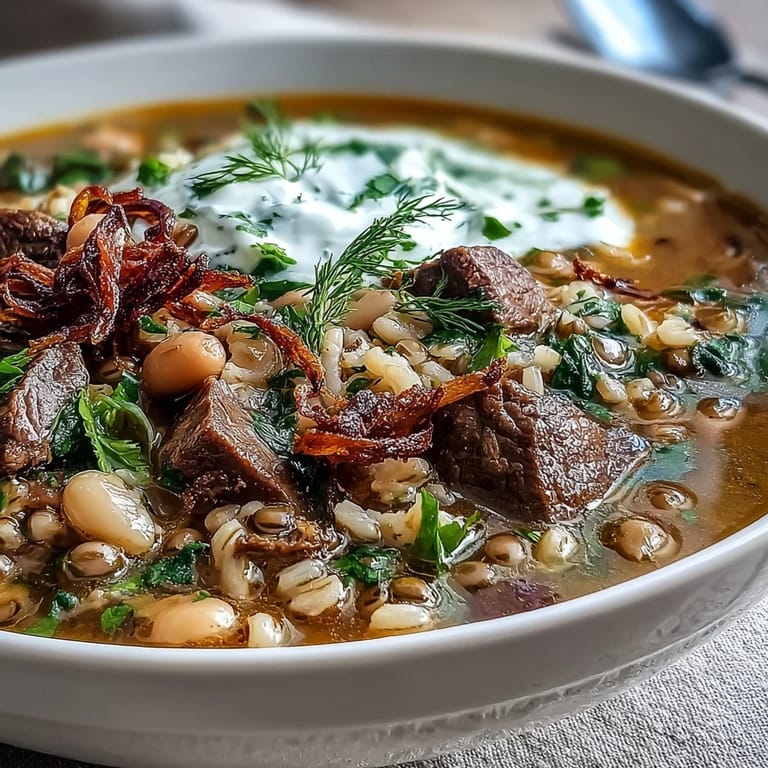
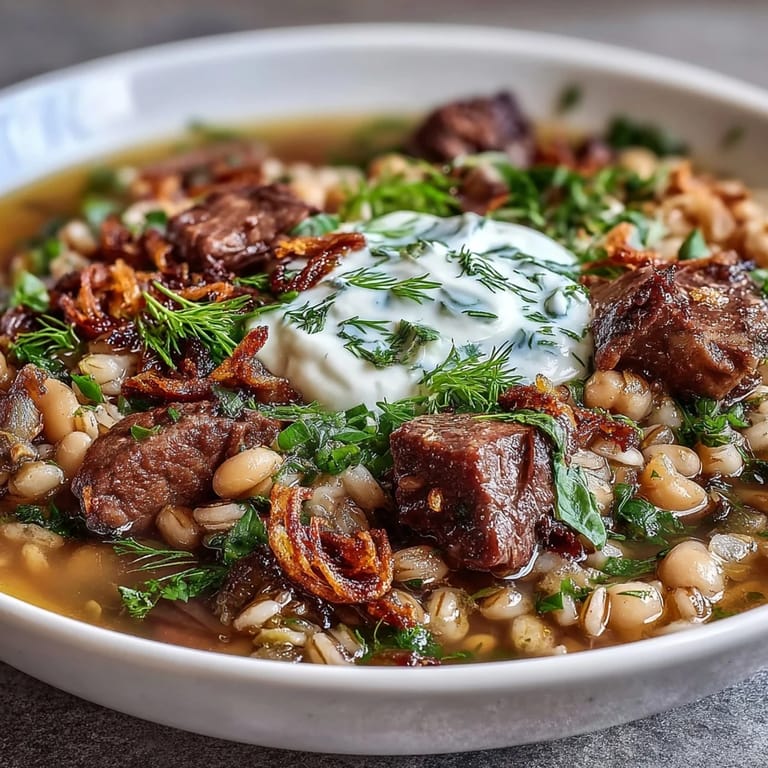
- Ladle soup into bowls, then drizzle sour cream in a generous spiral across the top and scatter mint-fried onions over everything. The contrast of temperatures and textures makes this moment worth the wait.
 Save
Save 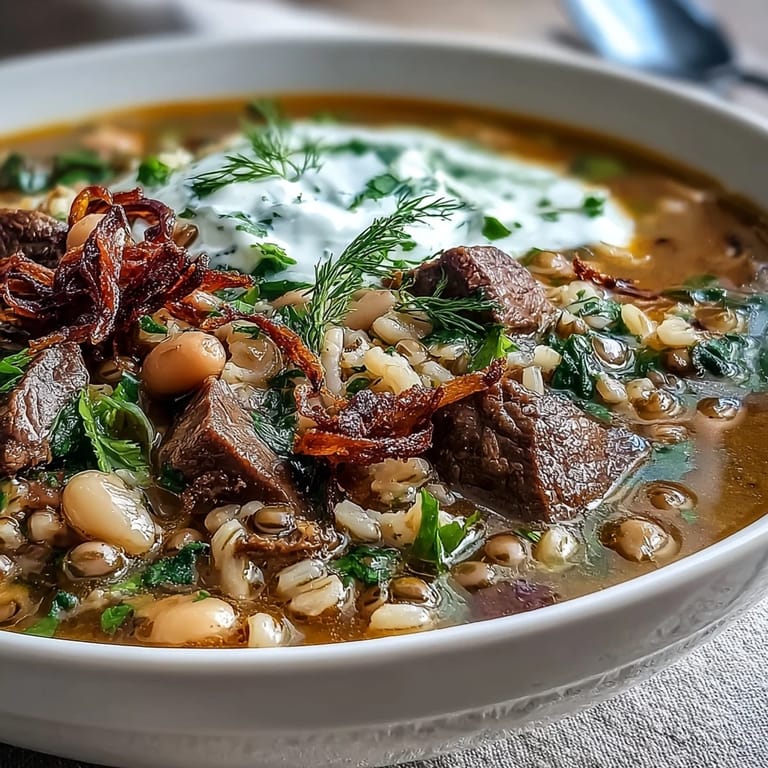 Save
Save There's a moment when my grandmother and I ate this together, and she pointed at the swirl of sour cream and said it looked like clouds. That simple observation made me see the soup differently—not just as sustenance, but as something small and beautiful worth savoring.
The Science Behind the Slow Simmer
Long, gentle cooking isn't wasted time—it's transformation. The beef becomes tender because collagen breaks down into gelatin, creating that silky mouthfeel. The beans and barley soften into the broth without dissolving entirely, thickening it naturally while the herbs contribute their oils and essence. This soup tastes even better the next day because those flavors continue mingling overnight.
Variations Worth Exploring
Vegetarian versions work beautifully if you skip the beef and use vegetable stock—mushrooms sautéed until deeply browned add umami that feels substantial. Some cooks use kashk instead of sour cream for more authenticity, and it's worth trying if you can find it. Others add spinach or beet greens for color and nutrition, stirring them in during the final minutes so they just barely wilt.
Serving and Storage Secrets
Crusty bread or Persian flatbread isn't optional—it's there to soak up every drop of broth, and honestly, it's my favorite part. This soup keeps beautifully in the refrigerator for up to four days, and the flavors actually deepen as it sits. The mint-fried onions are best made fresh each time, but if you're short on time, a crispy fried onion and a pinch of dried mint stirred into the sour cream works in a pinch.
- Make extra soup base and freeze it in portions so you can defrost and serve with fresh herbs whenever you want it.
- If the soup thickens too much as it sits, thin it with a splash of stock or water when reheating.
- Always taste before serving and adjust salt—this is one dish that forgives seasoning tweaks right up until it hits the bowl.
 Save
Save 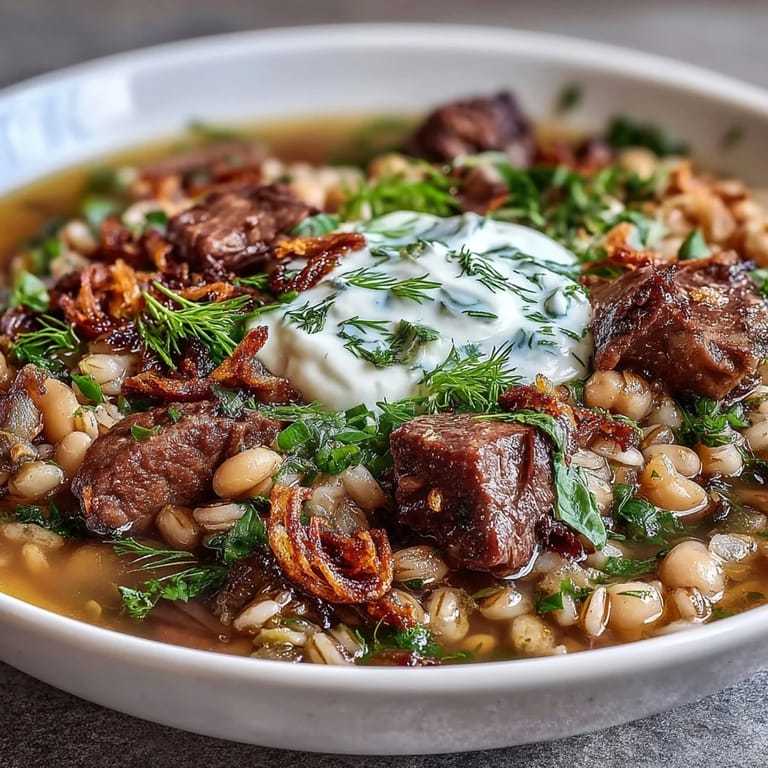 Save
Save This soup has a way of bringing people together, whether it's a quiet evening alone or a table full of hungry guests. Make it once and you'll understand why it has traveled through Persian kitchens for so long.
Recipe Q&A
- → Can I make this soup vegetarian?
Yes, simply omit the beef and use vegetable stock instead of beef stock. The combination of barley, beans, and lentils still provides substantial protein and heartiness.
- → Do I need to soak the beans overnight?
Yes, soaking dried white beans or cannellini beans overnight ensures they cook evenly and become tender during the simmering process. If you forget, you can use canned beans as a substitute.
- → What is kashk and where can I find it?
Kashk is a fermented whey product commonly used in Persian cuisine. It has a tangy, umami-rich flavor. You can find it at Middle Eastern grocery stores or online. Sour cream is an excellent substitute.
- → Can I use quick-cooking barley instead of pearl barley?
Quick-cooking barley can be used, but reduce the cooking time accordingly to avoid overcooking. Pearl barley provides a better texture and holds up well during the long simmering process.
- → How do I store leftovers?
Store the soup in an airtight container in the refrigerator for up to 4 days. The barley and beans will absorb more liquid over time, so you may need to add extra stock when reheating.
- → What cut of beef works best for this soup?
Chuck roast or beef stew meat works perfectly as these cuts become tender during the long simmering time. Cut the meat into uniform 2 cm cubes for even cooking.