 Save
Save My kitchen timer went off at midnight on a freezing January night, and I realized I'd been stirring onions for nearly forty minutes without noticing the time slip away. There's something almost meditative about watching those golden strands transform into something dark, glossy, and impossibly sweet—it's the kind of patience that teaches you something about cooking that no recipe book ever could. French onion soup isn't complicated, but it demands your attention and rewards it generously.
I made this for my sister the night she called with bad news, and we sat at the kitchen counter eating straight from the pot, not bothering with bowls. The heat rising from the soup fogged up her glasses, and for the first time that evening, she laughed. That's when I understood that this soup does something beyond filling you up—it wraps around you like a good conversation.
Ingredients
- Yellow onions, 3 large ones, thinly sliced: Don't skip the size or the thickness—those thin strands are what let the sugar caramelize evenly and create that mahogany color that makes the soup beautiful.
- Unsalted butter and olive oil, 1 tablespoon each: The combination keeps the onions from sticking while adding depth; butter alone burns too easily over the long cook time.
- Garlic, 2 cloves minced: Add this after the onions soften or it'll turn bitter and sharp instead of sweet and mellow.
- Sugar, 1 teaspoon: This isn't about making soup sweet—it's about coaxing the onions' natural sugars to the surface faster, which is the whole secret of good caramelization.
- Salt and freshly ground black pepper: Add salt halfway through cooking to help draw moisture from the onions and speed up the browning.
- All-purpose flour, 2 tablespoons: This thickens slightly and adds a subtle richness; cook it for a full two minutes to remove the raw taste.
- Dry white wine, 1/2 cup: The acidity cuts through the richness and the alcohol burns off, leaving behind pure flavor.
- Beef or vegetable stock, 1.2 liters: Use whatever you have on hand, but taste it first—some stocks are saltier than others.
- Fresh thyme and 1 bay leaf: These simmer quietly in the background and add an earthy note that ties everything together.
- French baguette, 4 slices about 1 inch thick: Day-old bread works better than fresh because it won't fall apart in the hot soup.
- Gruyère cheese, 120 grams grated: This is where the magic happens—it melts into those stretchy, golden threads that everyone reaches for.
Tired of Takeout? 🥡
Get 10 meals you can make faster than delivery arrives. Seriously.
One email. No spam. Unsubscribe anytime.
Instructions
- Start the onions low and slow:
- Heat butter and olive oil in a large pot over medium heat, then add your sliced onions and stir until they're coated. They'll release moisture first and look a little sad—this is exactly right. Let them soften and turn translucent, stirring occasionally so they cook evenly, about 15 minutes before the real caramelization begins.
- Let patience do the work:
- Once the onions start turning golden, resist the urge to crank the heat higher. Keep stirring frequently and add salt and sugar about halfway through cooking, around the 20-minute mark. The whole process takes 35 to 40 minutes, and those minutes matter—dark, caramelized onions are what separate good soup from forgettable soup.
- Build the aromatics:
- When the onions are deep brown and jammy, add your minced garlic and cook for just one minute until fragrant. The short time keeps it from burning and keeps it tender rather than sharp.
- Add flour for body:
- Sprinkle the flour over the onions and stir for about two minutes, letting the heat cook out the raw flour taste. This creates a light roux that adds subtle richness without making the soup thick or pasty.
- Deglaze and build depth:
- Pour in the white wine and use a wooden spoon to scrape the bottom of the pot, releasing all those browned, stuck-on bits—that's pure flavor. Let it simmer for a minute so the alcohol burns off and you're left with just the flavor.
- Simmer into comfort:
- Pour in your stock, add the thyme sprigs and bay leaf, and bring everything to a simmer. Reduce the heat and let it cook uncovered for 20 to 25 minutes, which lets the flavors blend and deepens further. Fish out the thyme and bay leaf when you're done, then taste and adjust seasoning with pepper and a pinch more salt if needed.
- Toast the bread to crispy gold:
- While the soup finishes, preheat your broiler and arrange baguette slices on a baking sheet. Brush both sides lightly with olive oil and slide under the broiler for about a minute per side—you want them golden and crispy but still capable of holding the soup without disintegrating.
- Bring it all together:
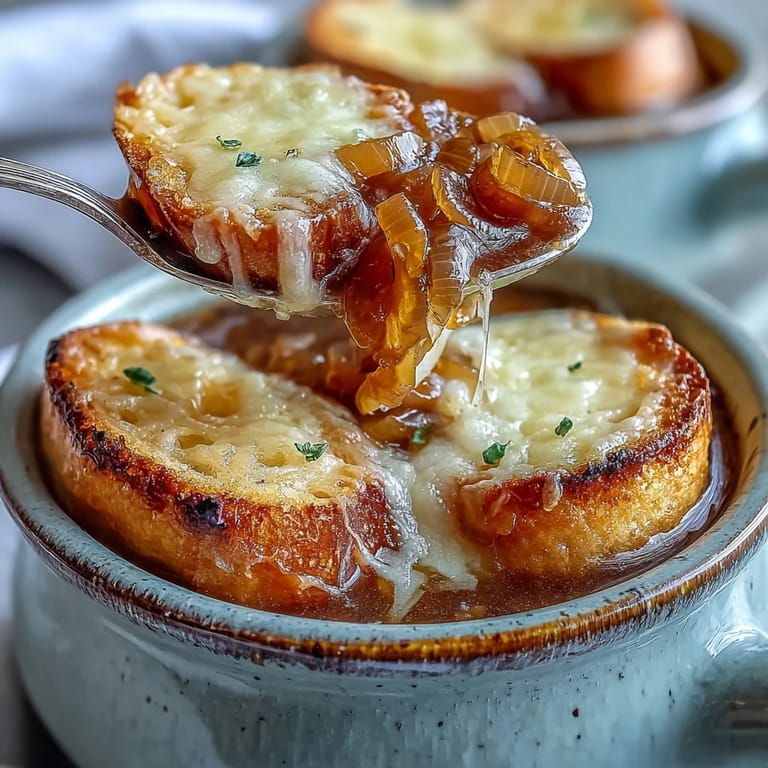
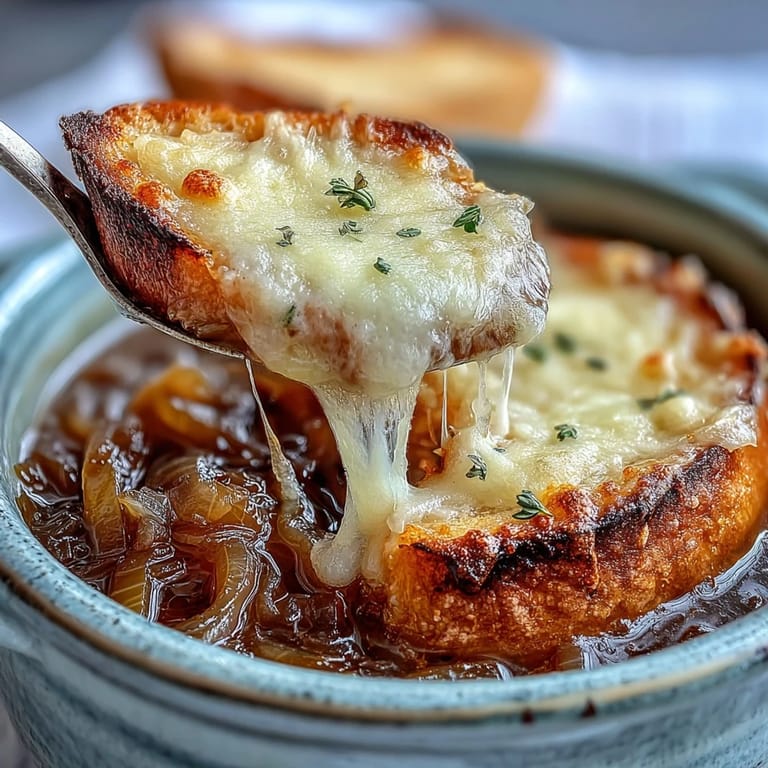
- Ladle the hot soup into oven-safe bowls, top each with a toasted baguette slice, then pile the grated Gruyère generously on top. Place the bowls on a baking sheet and slide them under the broiler for 2 to 3 minutes, just until the cheese melts into those gorgeous, bubbly golden islands. Serve immediately while everything is still hot and the cheese is still stretchy.
 Save
Save 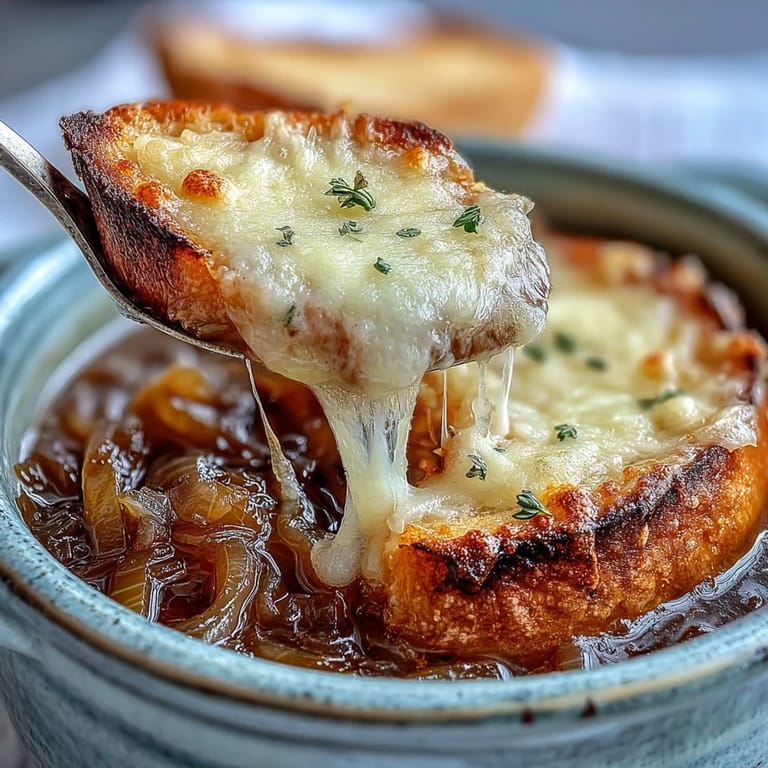 Save
Save There's a moment when you pull those bowls from the broiler and the cheese is bubbling and golden and still slightly molten in the center, and you realize you've made something beautiful with almost nothing. That's when French onion soup stops being just dinner and becomes something worth making again and again.
The Caramelization Magic
Caramelizing onions is the entire foundation of this soup, and it's worth understanding what's actually happening. As the onions cook, their moisture evaporates and their natural sugars brown on the surface, creating that deep mahogany color and sweet, almost nutty flavor. The low, steady heat matters more than anything else—rushing this step by turning up the flame will only scorch the bottom while the rest stays pale. I learned this the hard way years ago when I tried to speed things up and ended up with a pot that smelled like burnt tire tracks.
Wine and Stock Matter More Than You Think
The white wine adds acidity that brightens everything, but it also gives you a moment to scrape the bottom of the pot and pull up all those browned, caramelized bits that would otherwise just stick and burn. As for stock, a good one changes the entire character of the soup—rich, deeply flavored stock makes a restaurant-quality bowl, while weak store-bought stock makes something flat and forgettable. If you can find beef stock that tastes like actual beef, use it; if not, mixing beef and vegetable stock together gives you the best of both.
The Toast and Cheese Are Non-Negotiable
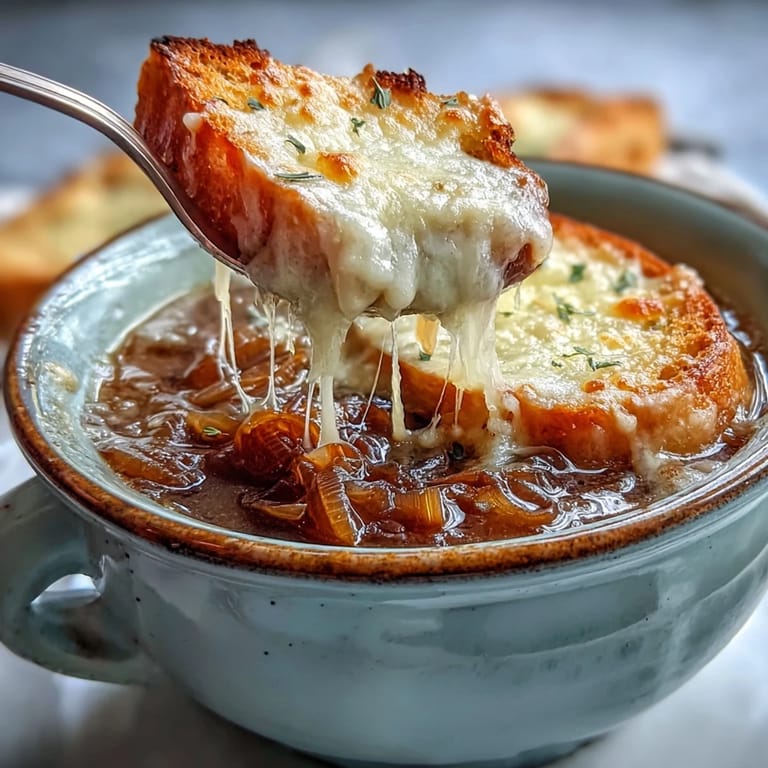
These two elements aren't just toppings; they're the reason people eat this soup. The bread needs to be toasted until it's actually crispy, not just warm, so it has something to resist the heat of the soup and the broiler rather than turning into mush. The cheese needs to be Gruyère or something equally good—Emmental or Comté work beautifully too—because cheap cheddar will break and separate and leave you with oily soup instead of that gorgeous, stretchy, melted layer.
- Always taste your cheese first; if it smells like plastic, it's not worth using.
- Grate the cheese yourself right before cooking if possible, because pre-grated cheese has anti-caking agents that make it melt unevenly.
- If your cheese starts browning too much before it's fully melted, move the bowls down to a lower oven rack.
 Save
Save 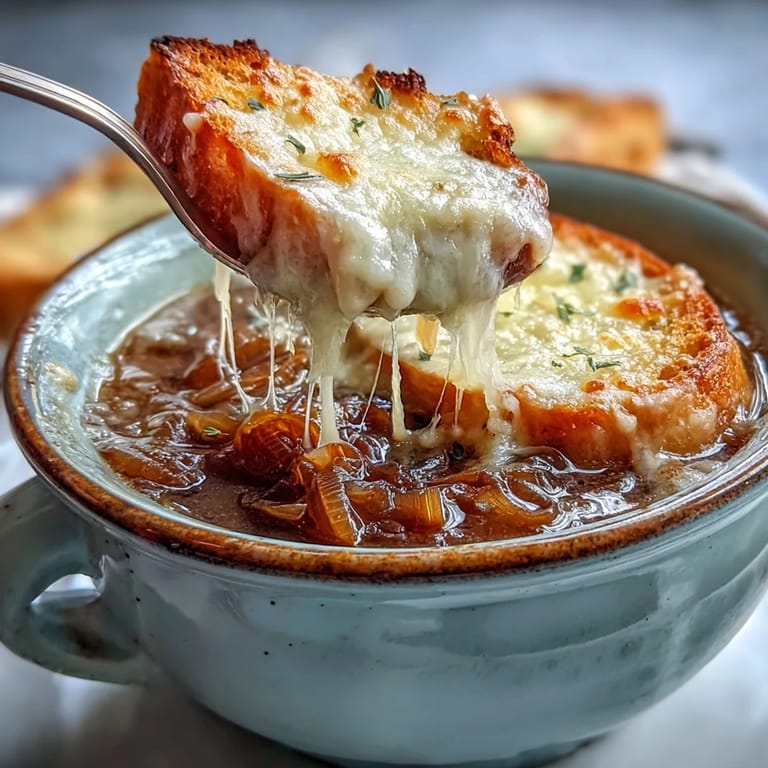 Save
Save This is a soup that asks for patience and gives back comfort, and once you make it once, you'll find yourself making it again when someone needs feeding or when you need reminding that simple ingredients and time can create something extraordinary. Keep the recipe close and make it often.
Recipe Q&A
- → How long does it take to caramelize the onions properly?
Caramelizing the onions takes approximately 35-40 minutes over medium heat with frequent stirring. Adding sugar and salt halfway through helps achieve deep, rich caramelization essential for authentic flavor.
- → Can I make this soup ahead of time?
Yes, prepare the soup base up to 3 days in advance and refrigerate. When ready to serve, reheat the soup, then add the bread and cheese topping before broiling.
- → What cheese works best if I don't have Gruyère?
Emmental or Comté are excellent substitutes that melt beautifully and provide similar nutty, complex flavors. Swiss cheese also works in a pinch.
- → Why do I need oven-safe bowls?
Oven-safe bowls are essential because the assembled soup goes under the broiler to melt and brown the cheese topping. Regular bowls may crack or break under high heat.
- → Can I use vegetable stock instead of beef stock?
Absolutely. Vegetable stock makes this dish vegetarian while still providing savory depth. For best results, use a high-quality vegetable stock or combine it with mushroom stock for extra umami.
- → What wine pairs well with French onion soup?
A crisp white wine like Chardonnay or Sauvignon Blanc complements the rich flavors beautifully. Light reds such as Pinot Noir also pair nicely without overwhelming the dish.