 Save
Save There's something about the smell of onions turning golden in butter that makes you stop whatever you're doing and just breathe it in. The first time I made French onion soup properly, I nearly gave up around the twenty-minute mark, convinced something was wrong because the onions looked almost burnt. My grandmother was visiting and caught me hovering anxiously over the pot, and she just smiled and said, "That's exactly what you want. Trust it." She was right. What felt like a disaster was actually the beginning of something truly special.
I made this for friends on the coldest night of winter, and everyone showed up looking half-frozen and exhausted. Within ten minutes of that first spoonful, the whole room just quieted down. People weren't checking their phones or making conversation—they were completely absorbed in their bowls. That's when I realized this soup does something beyond nourishment. It creates a moment.
Ingredients
- Yellow onions (4 large, thinly sliced): These are your foundation, and thin slicing matters because it helps them caramelize evenly without burning on the edges.
- Leeks (2 large, white and light green parts, cleaned and thinly sliced): Don't skip the cleaning—hidden sand in leeks is genuinely disappointing halfway through cooking.
- Shallots (3, thinly sliced): They add a subtle sweetness and sophistication that onions alone can't quite reach.
- Garlic cloves (3, minced): Add these after the onions are soft so they don't burn and turn bitter.
- Unsalted butter (3 tablespoons) and olive oil (2 tablespoons): The combination of both fats gives you the right caramelization without the butter burning at higher heat.
- High-quality beef broth (8 cups): This is not the place to use weak broth—it's the backbone of everything, so choose one you'd actually drink on its own.
- Worcestershire sauce (1 tablespoon) and soy sauce (2 teaspoons): These aren't detectable as individual flavors but rather deepen everything, adding umami that makes people say, "What is that taste?"
- Dry white wine (1/2 cup): The acid cuts through the richness and leaves behind a subtle complexity when the alcohol cooks off.
- Fresh thyme (2 teaspoons) and bay leaf: Together they create a savory backbone that whispers rather than shouts.
- Baguette (1, sliced into 1/2-inch rounds): Look for day-old bread if possible—it toasts better and won't become rock-hard.
- Gruyère cheese (2 cups, grated): This cheese actually melts beautifully and develops a slightly nutty flavor under heat, unlike some harder cheeses.
- Parmesan cheese (1/2 cup, grated, optional): A little adds extra sharpness that balances the sweetness of the caramelized onions.
- Salt and freshly ground black pepper: Taste as you go because the broth already contains salt, and overseasoning is easily done.
Tired of Takeout? 🥡
Get 10 meals you can make faster than delivery arrives. Seriously.
One email. No spam. Unsubscribe anytime.
Instructions
- Gather and Prep Your Aromatics:
- Slice your onions, leeks, and shallots uniformly so they cook at the same rate—this takes a few minutes but completely changes the outcome. Clean the leeks by slicing them lengthwise and rinsing between the layers where sand loves to hide.
- Start the Caramelization:
- Heat butter and olive oil in your pot over medium heat until the foam subsides. Add all your sliced onions, leeks, and shallots at once—it'll look like an impossibly full pot, but they'll shrink down as they release their moisture.
- The Long, Slow Cook:
- Stir frequently, every few minutes, scraping the bottom where caramelization happens fastest. Around 20 minutes in, they'll soften and begin turning golden; keep going. After about 35 to 40 minutes total, they should be deep golden brown with dark caramelized bits stuck to the pot—this is where all the flavor lives.
- Add Your Aromatics:
- Stir in the minced garlic and cook for just 2 minutes, stirring constantly so it perfumes the oil without burning.
- Deglaze with Wine:
- Pour in the white wine while scraping up all those browned, flavorful bits from the pot bottom with your spoon. The wine will sizzle and reduce slightly, cooking off the raw alcohol taste and leaving only the complexity behind.
- Build the Broth:
- Add your beef broth, Worcestershire sauce, soy sauce, fresh thyme, and bay leaf. Bring everything to a gentle simmer, then reduce heat and let it cook uncovered for 30 minutes, stirring occasionally so flavors meld.
- Taste and Season:
- Remove the bay leaf and taste carefully, adding salt and pepper incrementally because you can always add more but can't take it back.
- Toast Your Bread:
- While the soup simmers, preheat your broiler. Arrange baguette slices on a baking sheet and slide them under the broiler for about 1 minute per side until they're golden and just starting to crisp.
- Assemble and Finish:
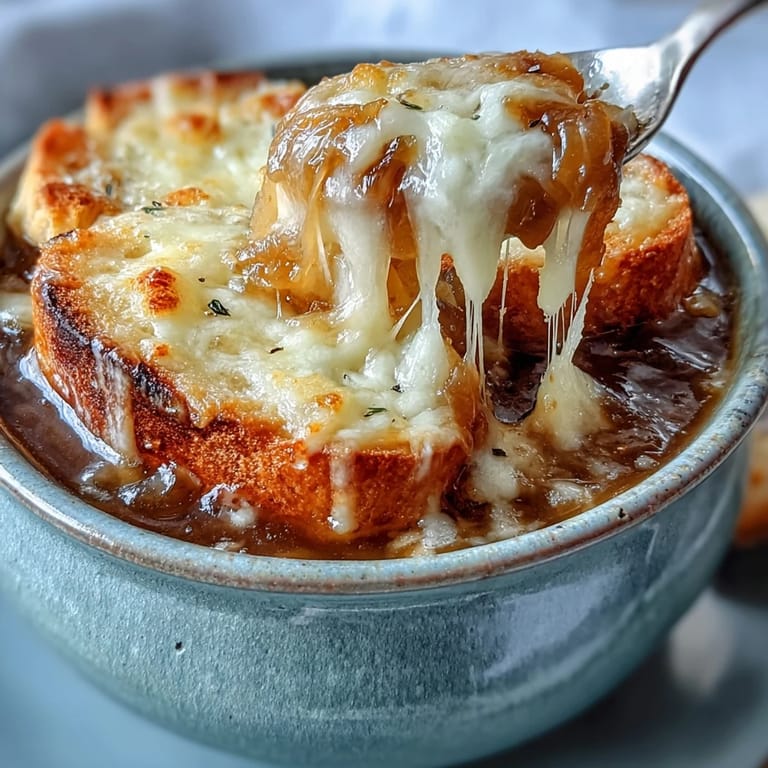
- Ladle hot soup into oven-safe bowls, top each with toasted baguette slices, and pile a generous handful of grated Gruyère on top. Slide the bowls under the broiler for 3 to 5 minutes until the cheese is melted, bubbling, and just beginning to brown.
- Serve Immediately:
- Pull the bowls out carefully—they're extremely hot—and garnish with a sprinkle of fresh thyme if you have it. Eat while everything is still steaming and the cheese is still pulling in those silky strands.
 Save
Save  Save
Save My sister made this soup for her partner's family dinner, and his grandmother took one spoonful and got quiet in a way that made everyone stop talking. She said it reminded her of evenings in Lyon as a teenager, sitting at a small counter watching someone make this exact soup. That's when I understood—good food doesn't just fill your belly. It connects you to places you've never been and people you've never met.
The Science of Caramelization
When you cook onions low and slow, their natural sugars break down through a chemical reaction called the Maillard reaction, creating hundreds of new flavor compounds that didn't exist in the raw onion. This is why 40 minutes of patient stirring tastes so radically different from 10 minutes of high-heat cooking. The color deepens, the smell transforms, and somehow a simple vegetable becomes something almost savory and meaty. This is the heart of the soup—everything else is just supporting players.
Choosing Your Cheese Wisely
Gruyère matters here because it has a higher melting point than younger cheeses and doesn't separate into greasy puddles under the broiler. Some recipes suggest Swiss cheese as an alternative, and while it works, Gruyère has this subtle nuttiness that feels right alongside caramelized onions. If you're using Parmesan, it's really an accent—the sharpness cuts through richness beautifully, but on its own it can taste a bit one-dimensional. I've learned to use both when I want extra complexity without overshadowing the soup itself.
Customizing Without Losing the Soul
This soup is honestly forgiving once you understand the basics, and I've made versions that still tasted wonderful with small changes. The vegetarian version works surprisingly well if you use a really strong vegetable broth—mushroom broth if you can find it—and skip the Worcestershire sauce since it's anchovy-based. Some people splash in sherry or cognac instead of wine, which adds a different kind of richness. For a lighter version, I've used half the cheese and honestly didn't miss it.
- If your baguette is very fresh and soft, toast it longer so it gets genuinely crispy and won't turn into mush in the hot soup.
- Make the soup a day ahead if you can—flavors meld overnight and it actually tastes better reheated than fresh.
- This freezes beautifully without the cheese and bread topping, so you can make a big batch and save portions for those nights when you need comfort food instantly.
 Save
Save  Save
Save This soup has shown up at my table through cold snaps and quiet evenings, and it never feels ordinary. Every bowl is a small act of comfort, and honestly, that's everything.
Recipe Q&A
- → How long does it take to properly caramelize the onions?
Properly caramelizing the onions, leeks, and shallots takes approximately 35-40 minutes over medium heat with frequent stirring. This slow process develops the deep, sweet, savory flavor that is essential to authentic French onion soup.
- → Can I make this soup vegetarian?
Yes, substitute high-quality vegetable broth for beef broth and use a vegetarian Worcestershire sauce alternative or omit it entirely. The caramelized onions still provide rich, complex flavor even without meat-based broth.
- → What type of cheese works best if I can't find Gruyère?
Swiss or Emmental cheese make excellent substitutes for Gruyère, offering similar melting properties and nutty flavor. You can also mix cheeses, combining Swiss with Parmesan for added depth.
- → Do I need special bowls to make this soup?
Yes, you'll need oven-safe soup bowls or crocks that can withstand broiler heat. Traditional French onion soup bowls are made of stoneware or ceramic designed specifically for broiling the cheese topping.
- → Can I prepare this soup ahead of time?
Absolutely. The soup base can be made up to 3 days in advance and refrigerated. When ready to serve, reheat the soup, ladle into bowls, add bread and cheese, then broil. The flavors often deepen after a day or two.
- → Why add wine to the soup?
The white wine deglazes the pot, lifting flavorful caramelized bits from the bottom while adding acidity and depth to balance the sweetness of the onions. The alcohol cooks off during simmering, leaving only complex flavor.